Style
Black dress fabrics compared: crepe, jersey, ponte and silk
Compare crepe, jersey, ponte, silk, lace and satin for a black dress: opacity, travel, warmth, wrinkles and care, with a filter by need.
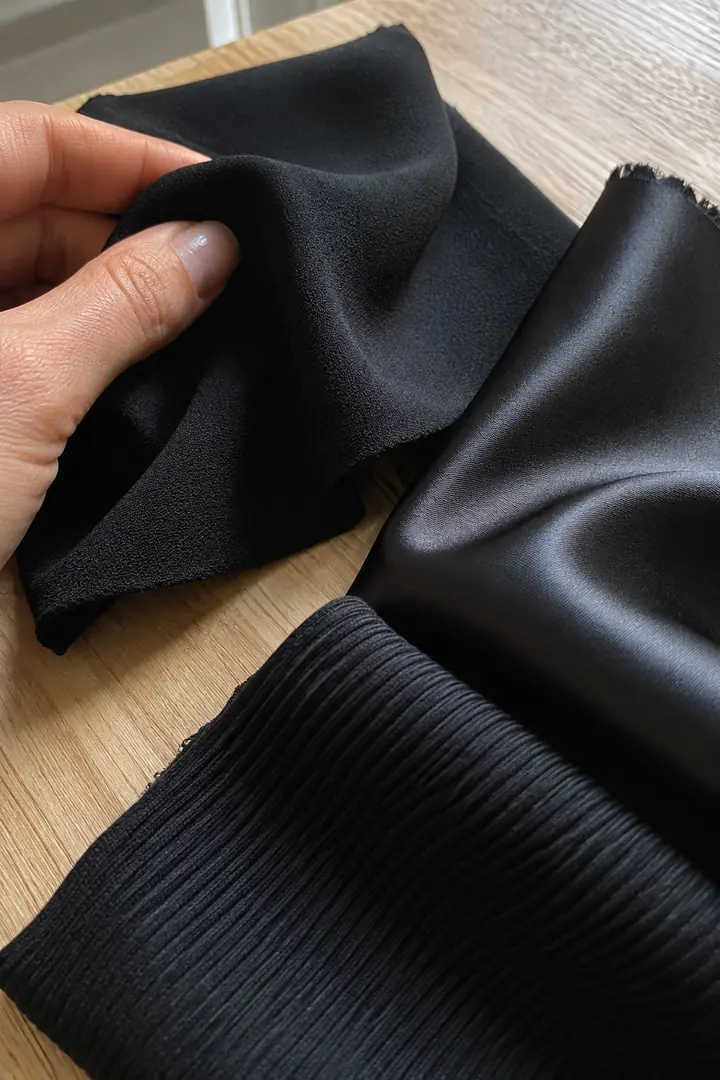
Choose a black dress by the actual fabric’s opacity, stretch, drape, surface and care label. Crepe, jersey and ponte describe constructions or textures with different possible compositions; satin describes a weave rather than one fiber. The comparisons below are starting points to check on the garment, not restrictions that make silk or satin evening-only.
If you decide to sell a dress, compare the cash retained after fees, shipping and care rather than the listing price alone. The dress resale calculator: fees and net proceeds shows its method and lets you keep the calculation.
Black shows the fabric, not just the colour
Black is unforgiving. It shows where a fabric is thin, where it shines, where it pills and where a seam pulls. Two black dresses cut from different fabrics can look like different colours, because the surface reflects light differently. Check the actual construction and condition alongside the composition and care instructions; a photograph or fabric name cannot predict its appearance after a year.
Three properties matter most: opacity (can you see through it?), recovery (does it stay smooth after sitting?) and surface (does it shine, pill or show lint?). The table below uses those three properties, plus travel and warmth, to compare the common options.
Fabric comparison
Filter by what you need
Tick one or more needs. Only fabrics that match all of them stay in the table. Without JavaScript, the full table is shown.
| Fabric | Opacity | Shape after sitting | Surface | Care |
|---|---|---|---|---|
| Crepe (matte) | Good, opaque in medium weight | Very good: drapes without clinging | Matte, hides small marks well | Check lining and labelled washing method |
| Ponte (double knit) | Very good | Very good: holds its line | Smooth; can pill in time | Check labelled cycle and drying support |
| Cotton jersey | Good if heavy; check the front | Good, may stretch | Soft, shows lint over time | Check permitted temperature and drying |
| Viscose jersey | Medium; needs lining for most wear | Good, drapes softly | Slight sheen | Check washing and reshaping instructions |
| Satin-back crepe | Good | Good, keeps structure | Light sheen that catches evening light | Check surface finish and professional-care label |
| Silk | Varies; often needs a slip | Creases easily | Natural sheen; shows marks | Confirm whether domestic washing is allowed |
| Lace | Low on its own; needs a lining | Good over a slip | Textured; detail-rich | Check lining, trims and care instructions |
| Wool knit | Opaque in most weights | Good; can stretch at the elbows | Soft; shows pilling | Use the approved hand, machine or professional method |
The care column lists checks, not a universal washing recipe. GINETEX explains that the finished garment’s symbols determine permitted washing, drying and ironing. Read the complete label, including linings and trims; a fabric name alone cannot choose the process.
Crepe: the reliable formal choice
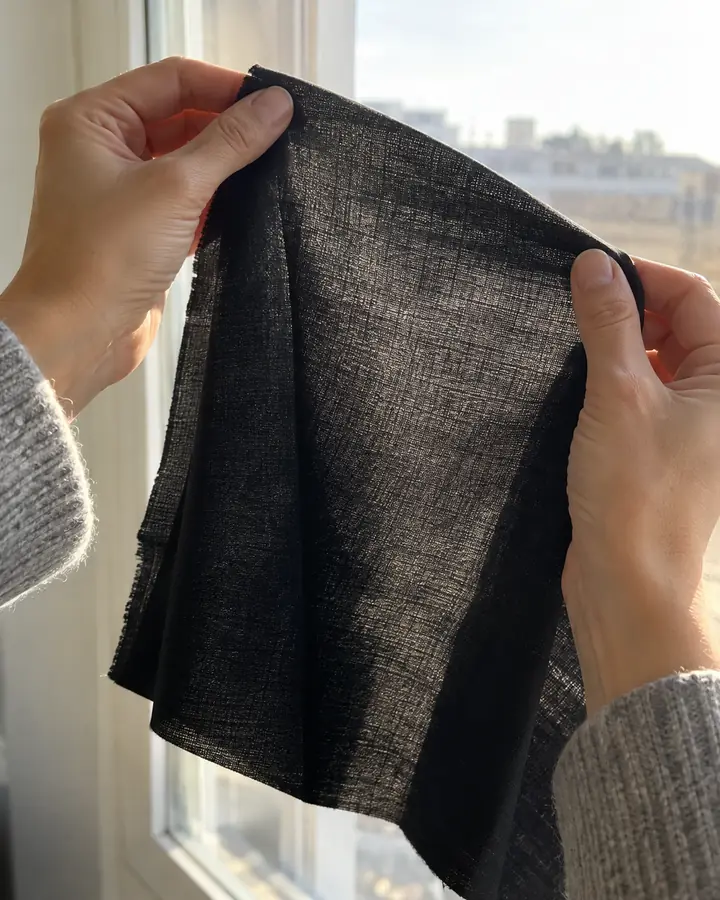
Crepe is a fabric with a slightly textured surface, made with twisted yarns. That texture gives it body and a matte finish, so the dress drapes without clinging. For a little black dress that has to work for meetings, weddings and dinners, a medium-weight matte crepe is usually the best single choice. Check the weight by holding a corner: it should fall in a clean line rather than folding limply.
Ponte: the traveller's black dress
Ponte di Roma is a double-knit construction formed through the knitting process, rather than two finished fabrics glued together. CottonWorks describes its stable structure and recovery, which can suit a more tailored dress. Check the actual garment’s weight, stretch and care label before choosing it for travel. If pilling develops, use a gentle method suitable for that fabric; surface bobbles alone do not establish that the dress is worn out.
Jersey: comfortable, but check the weight
Jersey is comfortable and forgiving. The risk is opacity: a thin jersey can show the outline of underwear and the shape of the body in ordinary daylight. Pick a heavier weight or a lined version for work. Cotton jersey breathes well, which makes it a good warm-weather option, while viscose jersey drapes more softly but may need a slip.
Silk and satin: evening, with care
Silk and satin can bring sheen to an evening look, though they can also be worn at other times. Check the actual dress for creasing, surface marks and snagging rather than assuming every model behaves alike. Follow its care and storage instructions: a suitable hanger may support a woven dress, while a knit may need folding to avoid stretching. Our care guide explains why construction matters.
Lace and wool knit
Lace is a detail fabric. It is beautiful on a black dress for an evening, but almost always needs a lining or a slip because the openwork pattern is transparent. Wool knit is a good cold-weather option. A fine merino knit is soft and opaque, while a chunky knit can stretch at the elbows and bag at the knees, so check the weight and the shape of the knit before you buy.
How to test a fabric in a shop
- Hold a section against a window to check opacity from the front and the back.
- Pinch the fabric and let go. If it creases and stays creased, expect the same in a suitcase.
- Look at the surface under the shop light, then near a window. Matte crepe and jersey change less than satin.
- Check the care label before you buy. A dry-clean-only dress is a real commitment.
Frequently asked questions
What is the most opaque fabric for a black dress?
Medium-weight matte crepe and ponte are usually the most opaque. Check any fabric against a window before buying, because weight and dye vary from one brand to the next.
Is ponte too casual for an evening?
Not if the cut is formal. A ponte sheath with a neat neckline and sharp heels can work for a dinner. For a more dressy look, choose satin-back crepe.
Further reading
Does a light patch in a photo identify the fabric or its condition?
A bright patch may be a reflection, a fold catching the light or a condition issue; one photograph does not establish which. Compare the actual garment under consistent light and take another view before describing it. Shine alone does not prove silk content, and a dark image cannot confirm that a fabric is opaque or free from pilling.
| Observation | Useful follow-up |
|---|---|
| Highlight changes with the viewing angle | Compare another angle and the real surface |
| Patch remains visible in ordinary light | Document its location without inventing a cause |
| Composition is unknown | Read the label or leave the fiber description unknown |
For an online listing, the guide to photographing a black dress connects these checks to the front, back and detail views. Keep a photograph’s lighting separate from the garment’s material description. A good-looking image is not a test of fiber content, colorfastness or future durability.
Check the layered outfit, not just one swatch
One fabric's opacity is not a complete test of a dress worn over an underlayer. Color, the area covered and the edges of the second garment can change what you see. A short opaque slip beneath a long sheer skirt may leave a visible transition that a small fabric sample cannot demonstrate. Decide whether you want that boundary to be seen before calling the result a problem.
| Observation | Follow-up |
|---|---|
| An underlayer edge shows through | Compare its cut and position with the dress |
| The outer fabric catches when walking | Check texture, fit and available movement in both garments |
| A photograph looks opaque | Check the actual outfit in the intended lighting |
Use the slip selection guide to separate coverage from compression and color from construction. A label saying satin describes a weave rather than proof of a particular fiber, washing method or anti-static performance. Read each garment's instructions and evaluate the combination rather than assuming that a fabric name settles the result.
Separate the textile from its neckline finish
A fabric name does not tell you whether a dress edge is finished with a facing, a lining or a binding. Look inside the actual garment before treating a visible inner edge as a property of crepe, jersey or satin. The same textile can be used with different constructions, and a larger lining can also meet a smaller facing.
| Record | Useful evidence |
|---|---|
| Material | Composition, actual texture and the complete care label |
| Edge construction | The attached inner piece and seam relationship |
| Condition | A loose attachment, worn area or change already observed |
The rolling neckline-facing guide helps identify that attached piece without diagnosing the cause from a photograph. Keep a material observation separate from a repair proposal. A different underlayer cannot secure a broken attachment, and a familiar fiber name does not supply a universal heat setting for the garment's finish or trim.
What does a directional pile add to the fabric comparison?
A raised pile changes the way a black surface presents to the light. A velvet dress can show lighter highlights as the viewing conditions change. Keep that surface behavior separate from the composition label and from how the finished dress moves.
| Evidence | What it helps establish |
|---|---|
| Pile or intentionally crushed finish | The surface structure and appearance to compare |
| Composition label | The fibers actually stated for the garment |
| Care label and maker's information | The treatment intended for that particular material and finish |
The velvet nap and viewing-angle guide provides a same-area comparison and a note card. A plush appearance does not identify silk content or establish the quality of an entire dress. Likewise, a commercial fabric name can leave knit or woven construction and added stretch unresolved. Ask for those details when they affect the purchase. Judge the actual cut, lining and comfortable movement alongside the surface you can see.