Care
Why your dress zipper keeps sliding down
Dress zipper won’t stay up? Separate slider travel, chain separation and bodice strain with a gentle observation check before arranging a repair.
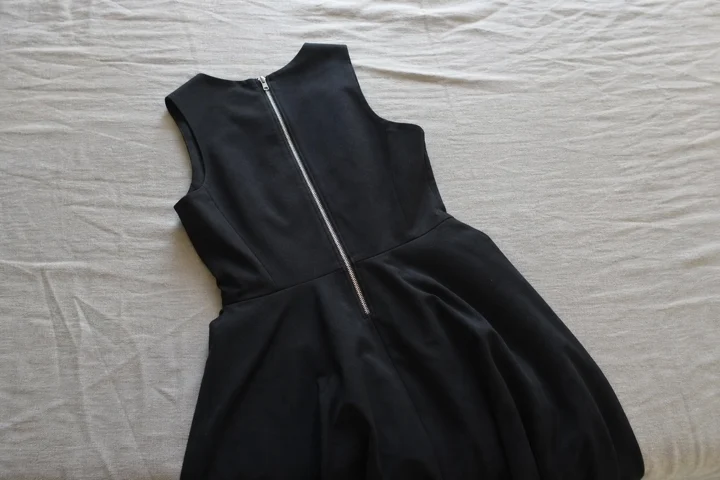
If a dress zipper will not stay up, stop pulling it tighter. Check whether the slider travels downward or the teeth separate below a stationary slider. Then compare the closure with the dress off and on. A locking problem, damaged chain and strain through the bodice call for different repairs.
Which part is moving?
Look at the top of the opening in a mirror, or ask a helper to observe without holding the dress closed. If the pull and slider move downward together, record that. If the slider stays at the top while the opening spreads underneath it, record separation instead. Neither symptom is the same as a slider caught in dress fabric.
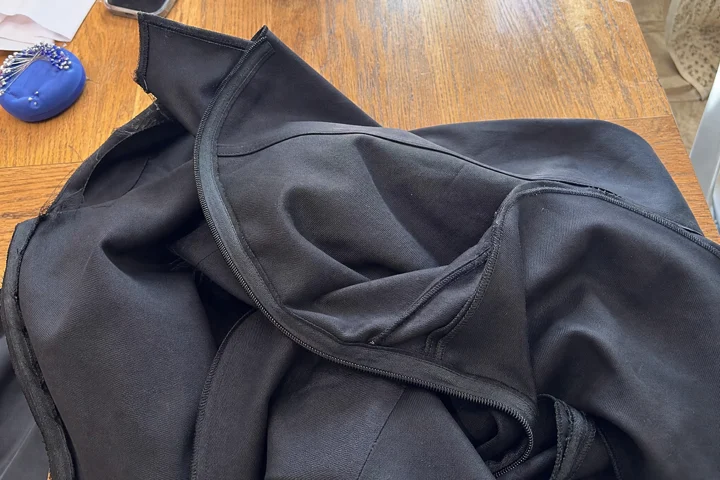
Examine the garment on a clean surface first. Look for loose stitching, a folded lining edge or missing teeth. Do not keep cycling a damaged closure to make it behave. Save a close photograph for the repairer, with the dress laid flat and the area well lit.
Does laying the pull flat help?
Some sliders have a lock, but the mechanism depends on the design. YKK explains its hidden locking pin: raising the pull releases it. This does not establish which slider your dress uses. Look for maker information or ask a repairer rather than assuming every decorative pull locks in the same way.
Close the empty dress gently and let the pull rest in its intended position. Observe whether it stays put without adding a load. Do not hang weights from it or tug on the chain to test its strength. If it drifts on the empty garment, mention that result at the repair appointment. It is useful evidence that the symptom is not limited to wearing the dress.
Compare an empty dress with a dressed fit
Use the underwear and underlayers planned for the event. Settle the waist before closing the zip. If someone must pull the two sides together forcefully, stop: the closure is being asked to bridge a fit problem. Compare the shell and lining fabrics; stretch in the outer material does not prove the lining or zipper area can stretch equally.
If the closure works normally off the body, note whether sitting changes the fit. Stop at discomfort, visible strain or renewed opening. Do not repeat a failure for a better photograph. A tailor may need to assess seam allowance and garment balance as well as the fastening.
| Observation | What to report |
|---|---|
| Slider descends on the empty dress | Possible slider or lock issue; identify the closure before replacing parts |
| Teeth separate below the slider | Chain separation rather than simple downward travel |
| Only opens while worn | Underlayers, body movement and where fabric pulls across the opening |
| Lining caught at one point | Local obstruction; do not force past it |
What should you avoid before an event?
Do not crush a delicate slider with pliers, glue the teeth or spray lubricant onto the fabric. A ring looped around a jeans button is not a universal solution for an invisible dress zipper. A safety pin through fine cloth can leave holes and does not repair the underlying failure. Choose another outfit if the fastening cannot hold securely.
A top hook can support the intended closure when fitted correctly, but adding one does not establish that a failing zipper is safe. Ask for an assessment rather than buying a hook as a substitute for diagnosis. Plan accessories after the fastening is reliable; our little black dress guide covers the wider fit check.
Take a concise repair record
Write four lines: slider travels or chain separates; empty-dress result; worn result with the intended underlayers; visible damage or trapped lining. Add the event date and whether the dress has recently been altered. This observation record is a proposed check, not a claim that we tested your garment.
Keep the care label available and ask whether the quote covers a slider, complete zipper or fit alteration. For a comparison of closure access, see side and back dress zippers. Access matters when dressing, but relocating a closure is a larger alteration than addressing an identified faulty part.