Style
The little black dress guide: how to choose one that fits
How to choose a little black dress that fits your body, your calendar and your budget: cut, fabric, length, and a one-minute fit finder.
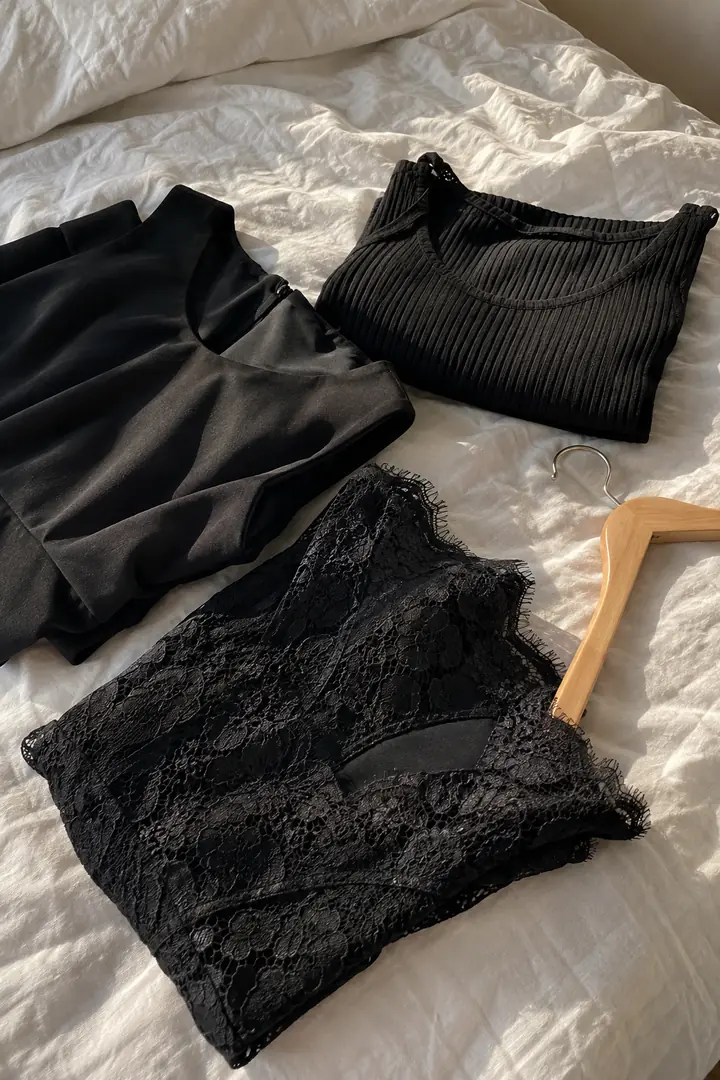
A good little black dress has three things: a cut that matches how you move, a fabric that stays opaque and keeps its shape, and a hem that suits the occasion you wear it for most. Start with those three choices, then use the fit finder below to get a starting point in one minute.
If you decide to sell a dress, compare the cash retained after fees, shipping and care rather than the listing price alone. The dress resale calculator: fees and net proceeds shows its method and lets you keep the calculation.
Why the little black dress still works
The idea is older than most trends. In October 1926, American Vogue published an illustration of a plain black crepe dress by Coco Chanel and compared it to the Model T Ford: a simple design meant for almost every woman. Black keeps the focus on the cut, so one dress can be dressed up or down without looking like a costume. Decades later, Hubert de Givenchy's black column dress for Breakfast at Tiffany's made the silhouette famous on screen.
That history matters for shopping because it explains the rule behind the dress. The black is not the design. The design is the cut, the fabric and the length. A cheap black dress in thin jersey looks worse than a plain black dress in good crepe, even if the colour is identical.
Start with the occasion you wear it for most
Most women wear a black dress for two or three situations: work, dinners and events, and everyday weekends. Choose the one you will wear most often and buy for that. A dress you wear once a year can be a little less practical. A dress you wear every week must sit comfortably when you sit, walk and carry a bag.
- Office: opaque fabric, sleeves or a jacket option, hem at or just above the knee.
- Dinner and events: a fabric with some sheen or structure, a neckline that works with jewellery, a length you can sit in.
- Weekend: jersey or soft ponte, easy seams, pockets if you can find them.
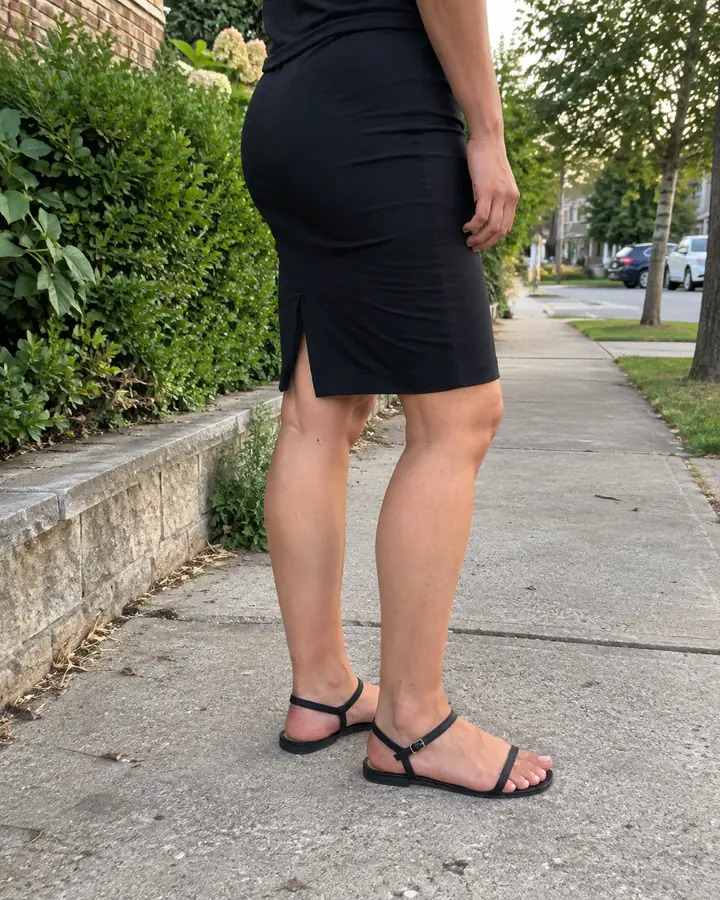
Choose the cut: sleek, relaxed or romantic
Three families of cut cover almost every black dress on the market. A sheath or column dress is sleek and structured, with few seams and a clean line from shoulder to hem. A shift or A-line dress is relaxed: it skims the body and moves with you. A wrap or fit-and-flare dress is romantic: it draws attention to the waist and uses drape to create shape.
None of these is better in general. The useful question is which one you feel like yourself in. If you spend the day in meetings and prefer to stand still, a structured sheath is probably right. If you walk a lot and want to be comfortable at a long lunch, a relaxed shift with a little stretch is easier to live with.
Fit finder: your starting point in one minute
Three answers. The result explains the cut and fabric to try first and why. Nothing is stored or sent.
Without JavaScript, the sections above and the fabric table below give the same information.
Fabric decides how it behaves
Fabric controls three things you notice within a month: whether the dress is opaque, whether it keeps its shape after sitting, and how it ages. Crepe is the most reliable choice for a formal look because it has body and drapes without clinging. Ponte is a double-knit that holds a clean line and works well for travel. Jersey is comfortable and forgiving but can cling and show lumps if it is too thin. Silk and satin look luxurious but crease easily and show every stain. The full comparison is in our fabrics guide.
Length changes the whole outfit
Hem length changes the proportions of your outfit more than any other single detail. A knee-length dress is the most flexible, because it works with flats, heels and boots. A midi dress is elegant and modern if the fabric is structured enough to hang straight. Mini dresses are the best choice for parties and warm evenings, while maxi lengths suit dramatic evening events and relaxed weekends. For a step-by-step chooser, read the length guide.
Check opacity before you buy
Hold the dress up to a window or a bright lamp. If you can see the outline of your hand through the front or the back, the fabric is too thin for a plain black dress, even if it looks dense on the hanger. Fabric may become more transparent when stretched, when you sit, or when you walk. Many black dresses have a lining or a slip for this reason. A lining also makes a jersey dress hang better and reduces friction against tights.
Five checks in the fitting room
- Sit down in the dress for at least a minute. Check that the hem does not ride up and that the neckline stays where it should.
- Raise your arms. If the back pulls or the sleeves restrict you, you will feel it all evening.
- Walk a few steps, including the stairs if the shop has any. Look at the hem in a mirror from the side.
- Check the seams under the arms and at the waist. Puckering or loose threads at the seam usually get worse.
- Test the shoes you would actually wear with it, not the ones you wish you owned.
Where to spend and where to save
Spend on fabric and cut. Those are the two things that you cannot fix later. A good tailor can shorten a hem, take in a waist or move straps, so a dress with a sound fabric and an imperfect fit is often a better buy than the reverse. Save on accessories. A black dress needs one good pair of shoes and one bag; it does not need a new wardrobe every season.
If you buy only one black dress this year, choose the one you would wear to a dinner you are not sure about. It will almost always work for the office with a jacket, and for a wedding with the right shoes.
Frequently asked questions
What length should a first little black dress be?
Knee length is the safest first choice. It works for the office, dinners and most events, and you can change the look with shoes and layers.
Is a jersey black dress appropriate for work?
Yes, if the jersey is thick enough to be opaque and has a clean cut. A ponte or a crepe dress is usually a more formal option for meetings.
How do I stop a black dress from looking tired?
Keep it clean, wash it in cold water, dry it flat or on a hanger away from sunlight, and store it on a padded hanger. Our care guide covers the details.
Do I need a black dress with sleeves?
Not necessarily. Sleeves are useful for work and cold months. A sleeveless dress is easier to layer under a jacket or cardigan, which makes it more versatile across seasons.
Sources and further reading
- Vogue, October 1926: illustration of Coco Chanel's black crepe dress, widely cited in fashion history.
- Little black dress: history of the garment
Name the reason before adding an underlayer
An extra layer earns its place when it addresses a concern you can identify. That might be coverage through a sheer skirt or how the dress moves over existing undergarments. If the complete outfit already provides the comfort and coverage you want, a slip is optional. Buying one automatically can introduce a waistband, neckline or hem that needs another decision.
| Your question | Useful check |
|---|---|
| Only the skirt needs more coverage | Compare a half slip and its waistband |
| The bodice also needs a layer | Compare a full slip's upper edges with the dress |
| The dress feels restrictive | Revisit its fit instead of adding compression by default |
The guide to choosing a slip for a black dress provides a visibility map and a movement check. Keep the dress, layers and intended activity together when deciding. An attractive photograph of one item does not establish that its neckline, back or slit will work with the dress already in your wardrobe.
Include fastening access in the try-on
A black dress can meet your color, length and dress-code preferences while still being awkward to put on. Check its actual opening before deciding that it works for your routine. Side and back placements change the reaching task, but neither location guarantees independent dressing. Try the complete fastening gently with the layers you intend to wear.
| Observation | Question to resolve |
|---|---|
| You cannot comfortably reach the tab | Can the dressing arrangement work reliably? |
| The opening strains when worn | Does the complete garment fit? |
| The chain catches or separates | Does the fastening need repair assessment? |
The side-versus-back zipper comparison keeps those observations separate. For an online purchase, ask where the opening starts and ends and whether another hook is involved. A photograph of a closed zipper does not show how easily the dress opens, and the word invisible does not establish condition or quality.
What does an inside shoulder feature tell you about fit?
Look inside the shoulder before assuming that a small ribbon is an extra dress strap. A hanging loop and an undergarment keeper have different intended tasks. Neither establishes that the neckline, armhole or bodice fits comfortably, and a new fastening cannot make a too-tight seam suitable for movement.
| Question | Evidence to use |
|---|---|
| Does the dress fit as intended? | Ordinary sitting, reaching and walking with the planned outfit |
| What is this inside loop for? | Its attachment, matching part and the maker's instructions |
| Does it need repair? | A visible loose or damaged attachment assessed without pulling it |
The inside-dress loop comparison includes a snap counterexample: some hanging systems also use shoulder snaps. Keep that purpose unconfirmed until the actual arrangement is known. Then check the complete dress again; a functioning keeper may address a wandering strap, while the rest of the fit remains a separate decision.