Style
Black dress length guide: mini, midi and maxi
Which black dress length suits which occasion, how the hem changes the proportions of an outfit, and a quick chooser for your next purchase.
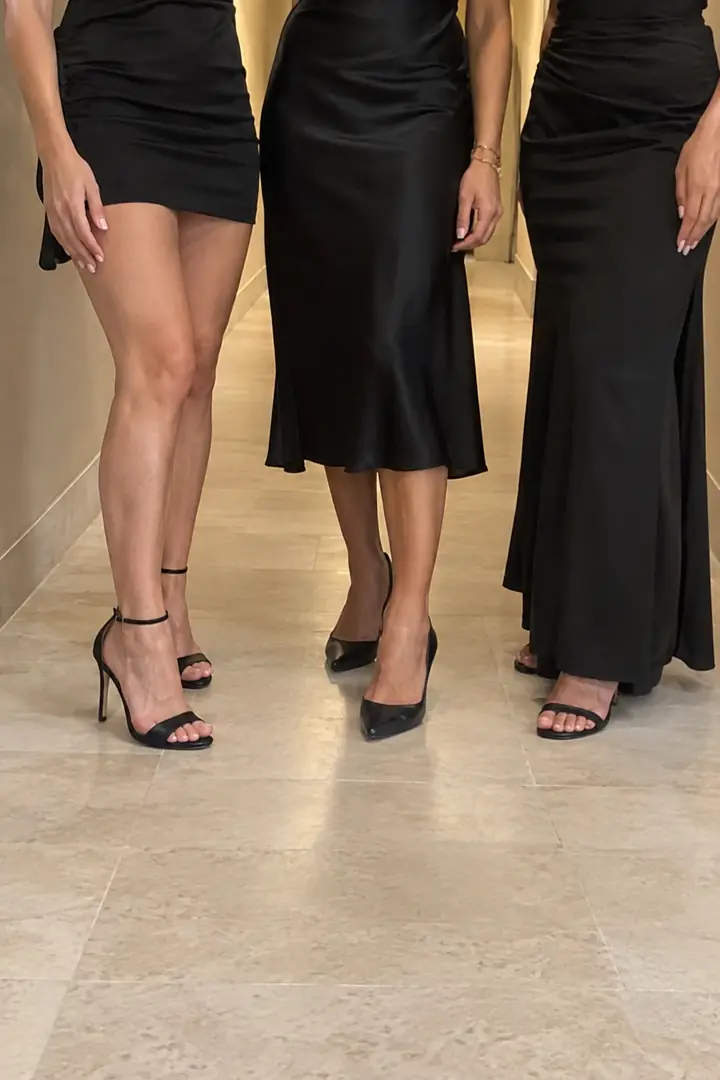
Choose a black dress length by the occasion first and the body proportions second. Knee length is the most versatile for work and dinners, midi suits elegant daytime and evening events with a structured fabric, mini is for parties and warm nights, and maxi is for relaxed, dramatic evenings. Use the chooser below to see which hem fits your plans.
Why the hem changes everything
The hem sets the proportion of the outfit. It determines how much leg shows, where the eye stops, and how the shoe looks against the dress. Two identical black dresses can feel completely different if one ends at the knee and the other ends at mid-calf, even with the same shoes. That is why a length chooser is more useful than a list of rules about body type.
Most people wear a black dress at two or three lengths over the years. Knowing which one you reach for most often tells you what to buy next.
The four lengths and what each one does
| Length | Best for | Shoes that work | Watch out for |
|---|---|---|---|
| Above the knee | Parties, warm evenings, dates | Heeled sandals, ankle boots, sneakers | Sitting on low sofas; tights in cold weather |
| At the knee | Office, dinners, weddings, most events | Pumps, loafers, flat boots | Check the invitation; knee length alone does not establish formality |
| Below the knee | Formal daytime, smart evenings | Pointed pumps, block heels, flat pointed shoes | Hems that cut the calf visually when shoes are too low |
| Ankle or maxi | Long dinners, garden parties, relaxed weekends | Strappy sandals, flat sandals, ankle boots | Hem catching on steps; needs enough fabric body |
Length chooser
Pick the hem you are considering. The result explains where it works and what to check.
Select a length to see what it does for the outfit.
Proportions without rules
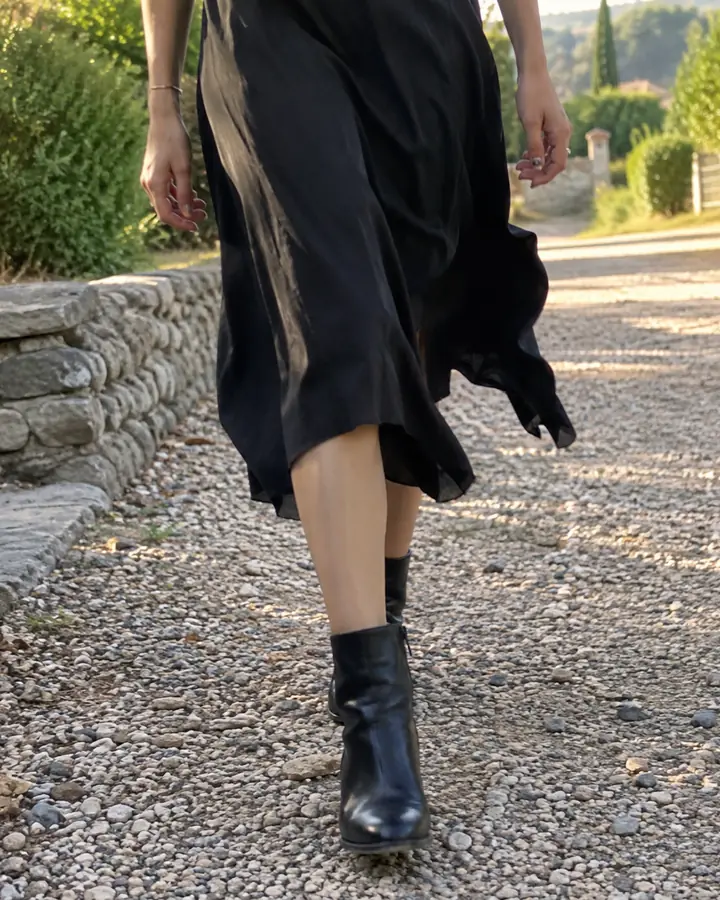
Proportion is about balance, not measurements. A short hem looks lighter when the shoe is a strong, visible heel and the rest of the outfit is simple. A long hem looks taller when the shoe is a pointed flat or a sensible block heel, and when the fabric has enough structure to fall straight. If you want the look to feel longer, pick a fabric that hangs; if you want it to feel shorter and sharper, pick one with more shape.
Try the dress with the shoes you actually plan to wear. Stand in front of a mirror, then walk and sit. The hem that looks right standing often rides up when you sit, and a hem that looks too long in a shop can be perfect with heels.
Length and fabric go together
A midi or maxi black dress needs a fabric that falls straight. Crepe and ponte keep their line, so the hem stays even. Thin jersey can cling around the knees and show movement lines, which often makes a long dress look untidy. If you love a long black dress in a light fabric, add a slip or choose a lined version. The fabric choices are explained in the fabric guide.
When a tailor can fix the length
A tailor can usually shorten a hem with a clean finish, especially on a lined dress. Lengthening is harder: it depends on whether the fabric has enough allowance and whether the original hem line is visible. Ask before you buy. If the length is perfect except for half an inch, a hem adjustment is often worth the cost of a dress you will wear for years.
Choosing for the next twelve months
- List your three most frequent occasions for the next year.
- Find the length that works for two of them, not for one.
- Buy in the length you will wear more often, and let accessories cover the rest.
For most people, the answer is a knee-length dress with a second, more casual option in midi. That pair covers almost every invitation without repeated shopping.
Frequently asked questions
Is a midi black dress still current?
Yes. A midi black dress in a structured fabric is a classic for dinners and daytime events. Choose a fabric that falls straight and avoid very thin jersey.
Can a mini black dress be worn to work?
It depends on the office. In most workplaces a mini is better kept for after-work events. If you wear one during the day, add a tailored jacket and tights.
Which length is best with ankle boots?
Above the knee or at the knee. A maxi with ankle boots can work, but the boot and the hem must be coordinated carefully, or the outfit will look cut in two.
Further reading
- Little black dress: history and styling conventions
Length does not establish the dress code
A hem is one part of an outfit. A long cotton sundress and a long evening gown can reach the same point while belonging to different events. Fabric, construction, finish, coverage and the host’s instructions matter alongside length. Use the chooser as a proportion prompt, not as approval for a formal invitation.
For a wedding, read the event-specific black-dress guide before deciding on a hem. Emily Post’s attire guidance separates daytime and evening formality and allows for local customs; a single length table cannot replace that context.
Try the actual dress with its shoes. Sit on a chair of an ordinary height, walk, turn and step up safely. Check where the lining and any slit move, not only the lowest edge while standing. Pinning a proposed hem with a fitter makes that decision more useful than judging a dress from a label such as mini or midi.
Check the hem when you move
A hem that feels comfortable while standing can sit differently when you take a seat, climb steps or bend. Try the dress with the shoes and layer you intend to wear, then check the movement you expect at the event. Choose a length that meets any stated venue requirements and lets you focus on the occasion. For a memorial, the funeral attire guide explains why family instructions matter more than a fixed number.
Test the hem for a seated conversation
For an interview, check how the dress sits in a chair as well as how it looks while standing. Walk, reach for your bag and stand again in the shoes you plan to wear. If you have to keep adjusting the hem, try another option rather than relying on a universal length. The interview guide includes a separate check for dress-code instructions and the route to the meeting.
Check a slit separately from the bottom hem
A dress's center-front length does not describe every place where an underlayer can show. A slit, wrap opening or uneven hem creates another visibility boundary. Before buying or shortening a slip, check that exact area with the complete outfit worn together. A shorter slip can still appear through the side of a slit while walking.
| Outfit detail | What to compare |
|---|---|
| Straight hem | Both lower edges after sitting and standing |
| Side slit | The visible side of the layer during ordinary steps |
| Asymmetric skirt | The shortest edge and each opening, not one average length |
The black-dress slip guide connects that hem check with the neckline, back and waistband. Keep the seller's measurement convention with any quoted length. A full slip measured from a shoulder and a half slip measured from the waist need different reference points before their numbers can help you compare an outfit.