Style
How to choose a slip under a black dress
Choose a full or half slip around your black dress. Check the neckline, back, slit, hem and movement with two local decision aids before buying another layer.
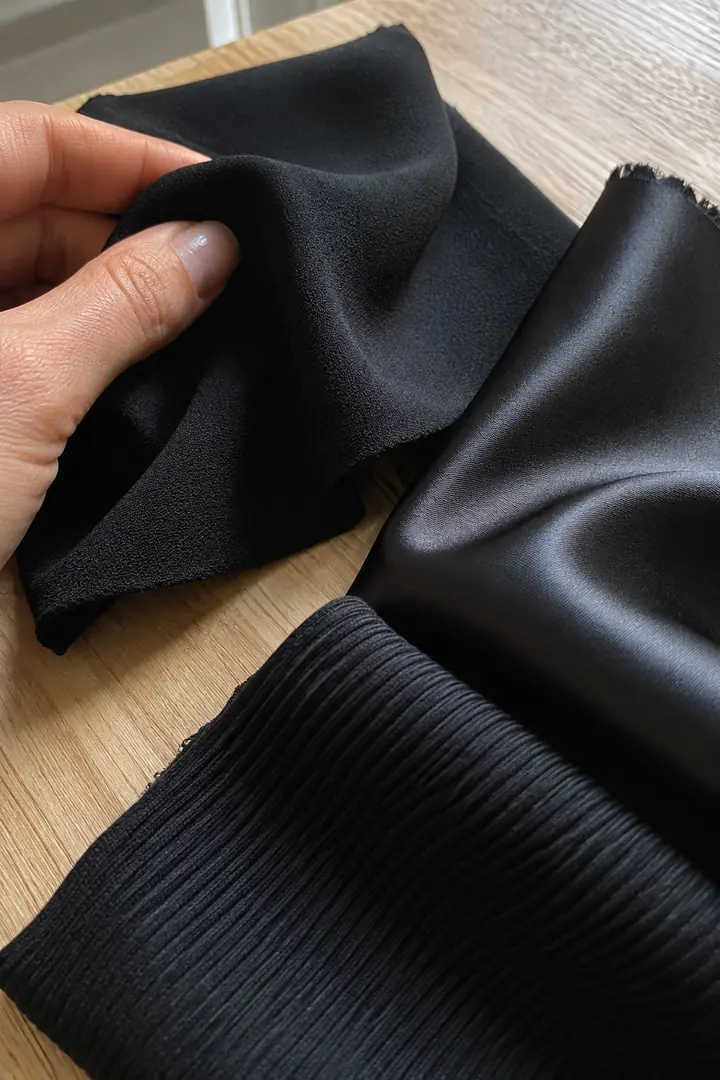
Choose a slip by the coverage your black dress needs, then check the neckline, back, slit and hem together. A full slip covers the torso; a half slip starts at the waist. Test the actual layers while sitting and walking before deciding whether their color, fit and movement work.
Your dress may need no extra layer at all. Start with a specific concern: a skirt that shows more than you want, an undergarment outline, or a layer that catches as you move. Adding fabric without naming the problem can create a visible waistband or another hem to manage.
| What needs checking | A possible starting point | What it leaves unresolved |
|---|---|---|
| Torso and skirt | A full slip | Its straps, neckline and back may show |
| Skirt only | A half slip | It does not add bodice coverage |
| A dress with a high opening | Compare underlayers with that opening | A shorter hem alone does not solve every slit |
| No specific coverage or movement issue | Try the dress without an added slip | Check the complete outfit in the intended setting |
Do you need a full slip or a half slip?
A full slip runs from the upper body into a skirt; a half slip begins at the waist. That coverage difference is more useful than choosing whichever product is called a basic. Shadowline's comparison illustrates why an open back or low neckline can rule out a particular full slip even when its skirt works.
Look at the actual upper edges before buying. A full slip's armhole or side panel may be higher than the dress, and a half slip's waistband can make a line under a close-fitting waist. A photograph of a slip by itself cannot show how those two garments will sit together.
Where does the extra layer need to work?
Open the area that matters to your outfit. These notes stay on this page and do not choose a size.
The skirt, with no added bodice coverage
Compare a half slip's waistband and skirt with the dress. Check whether its upper edge shows through or shifts when you sit.
Both the torso and the skirt
Compare a full slip's neckline, straps, armholes and back before checking the hem. A hidden lower edge cannot conceal an upper edge that sits too high.
A low back, open side or high slit
Check that exact opening with the layers together. Leave the option undecided if the shape you need is not shown or cannot be tried.
How short should the slip be?
The underlayer needs to remain where you intend it to be when the outfit moves. A fixed gap measured on a hanger does not settle that question. Check the dress's shortest edge and any opening, not just the center-front hem. Our black-dress length guide helps separate different hem positions.
Journelle's slip guide and Triumph's choosing advice both favor a shorter underlayer, but their suggested gaps differ. Treat a maker's figure as a starting point for its garment, not a guarantee of invisibility in every dress. Sit, walk and turn in the intended outfit. A slit can reveal the side of an underlayer even when its hem stays above the dress hem.
Should the slip always be black?
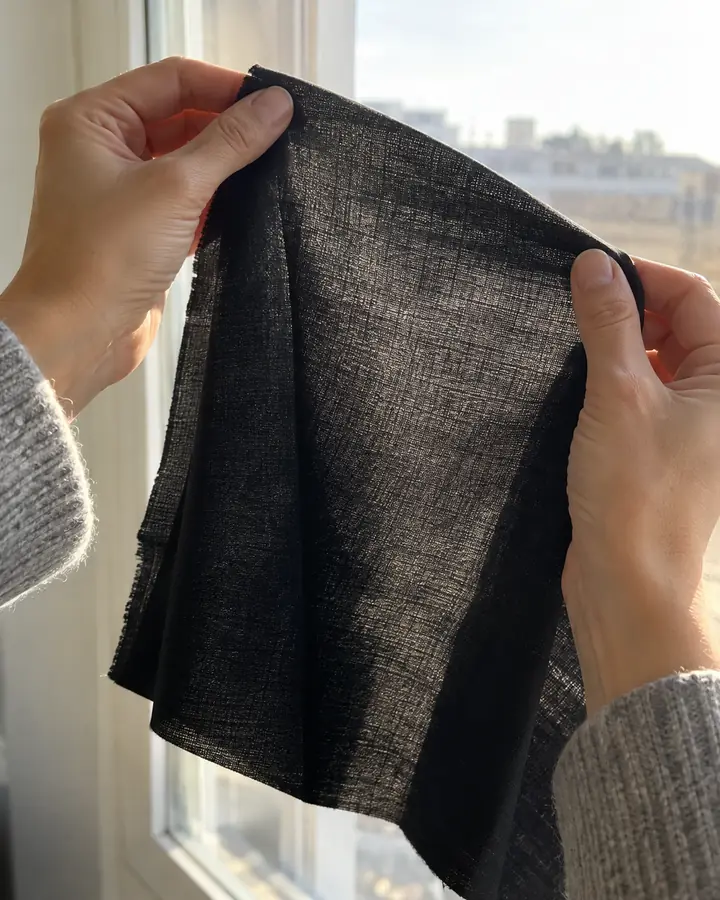
Compare the actual colors beneath the dress rather than selecting by the outer dress's name alone. A sheer black fabric over black, a shade near your skin, or a deliberate contrast can create different visible effects. Decide whether the layer should disappear or be part of the outfit, then inspect that result in ordinary light.
Check the appearance across the entire dress. A short opaque layer may create a clear boundary beneath a longer sheer skirt. That is an outfit choice if you want the boundary visible; it is an information gap if the product photograph hid it. The black-dress fabric guide distinguishes surface, composition and opacity without assuming that all black textiles conceal what is beneath them.
What tells you that the layers move well together?
Observe whether either layer climbs, folds or needs repeated adjustment during comfortable movement. A smooth-looking still photograph cannot answer that. Try the intended undergarments and shoes, then check the front, back and side after sitting and walking. Avoid choosing an extra-tight slip to force another garment into place.
A slip is not automatically shapewear. Read the product's intended fit and size guidance instead of assuming it must compress. If the dress itself restricts movement or its closure is under strain, revisit the dress fit. Adding another layer does not establish that the underlying problem has been solved.
What changed in your outfit check?
An edge became visible when sitting
Record whether it was a neckline, waistband, side edge or hem. Recheck that boundary with another cut rather than shortening an unrelated part.
The layers bunch or climb while walking
Compare fit, texture and the amount of fabric in the two layers. Do not assume one chemical spray or fiber name will resolve every cause.
The outfit works without the extra layer
Keep that as an option. A slip serves the concern you identified; it is not a compulsory addition to every black dress.
What should you ask before buying online?
Ask for the product's measurement method, neckline and back views, fabric composition, care instructions and return conditions. A listed length may use a different starting point for a full slip and a half slip. Retain the seller's method with the number instead of comparing two unlabeled lengths.
Choose one outfit to check first, using the main black-dress guide to keep cut, occasion and comfort together. A useful purchase note reads: “I need coverage at this area, these edges must stay where intended, and I can care for both garments separately.” That is a clearer brief than buying a supposedly universal invisible layer.
Questions about slips and black dresses
Does every black dress need a slip?
No extra layer is required merely because a dress is black. Check the actual coverage and movement you want before adding one.
Can a half slip cover a sheer bodice?
A half slip starts at the waist. It cannot add coverage above that edge; consider the dress's upper construction separately.
Will a shorter slip stay hidden behind a slit?
Not necessarily. A slit can show the side edge while you walk. Check the actual opening with both layers worn together.
Is a slip the same as shapewear?
Not automatically. Check the intended construction and fit; a simple layering slip need not compress.
Can you wash both layers the same way?
Read each garment's instructions. Similar colors or a shared outfit do not establish compatible cleaning methods.
Can adjusting the straps fix every visible edge?
Strap adjustment changes where a full slip hangs. Check the neckline, armholes, back and hem again rather than assuming all will move into place together.