Care
Dress neckline facing flips out: what to check
Identify a rolling dress facing, understand understitching and choose the next useful observation. Two local decision aids and a clear repair note.
A dress facing that flips out needs its edge finish and attachment checked, rather than repeated tucking. Identify the attached inner piece, note when it rolls and look for loose stitches or strain. Understitching can help a facing stay inside, but the right repair depends on the actual neckline and fabric.
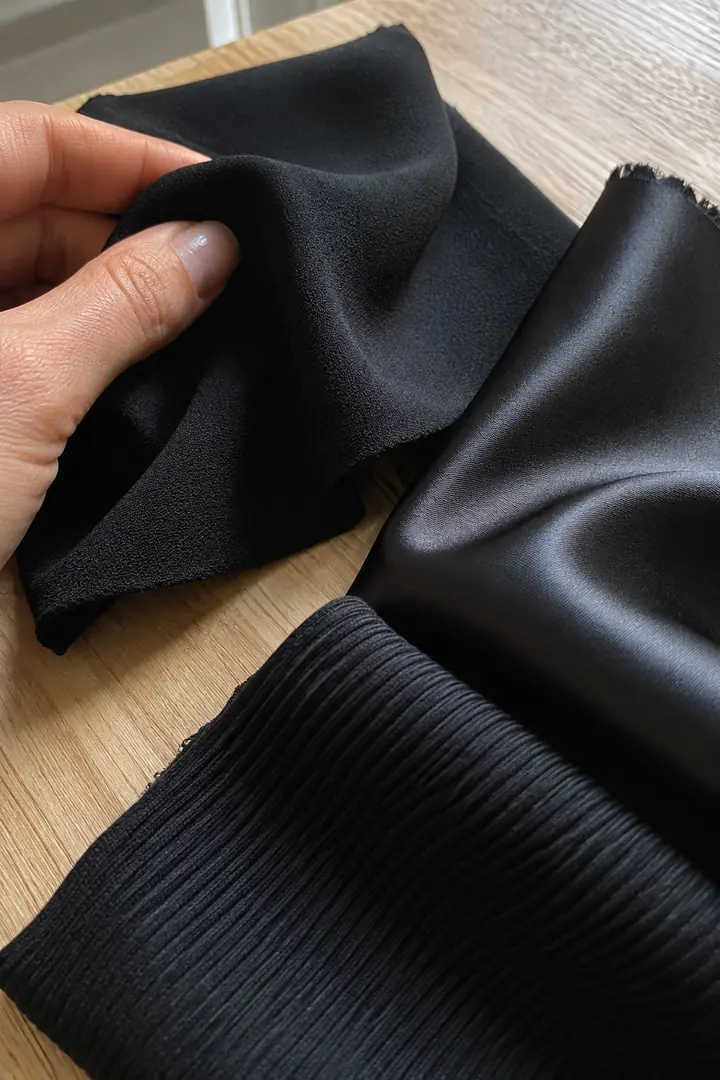
On a black dress, a small inner edge can catch the light even when both sides are black. First establish what is showing. This guide helps you describe a ready-made garment and choose a useful next check; it is not a universal sewing pattern or a diagnosis from one photograph.
| What you see | What to check |
|---|---|
| A piece attached around the neckline | Facing, seam finish and attachment |
| A larger attached inner layer | Whether lining is rolling at the edge |
| A separate undergarment edge | The slip's own neckline and position |
What is a neckline facing?
A facing is an attached fabric piece that finishes a garment edge on the inside. It may follow the neckline alone or be part of a larger facing joining neckline and armholes. Its job differs from a separate slip worn underneath.
Trace the piece gently with the dress off and supported. A label, full lining and facing are not interchangeable names. If you are unsure which layer is attached where, photograph the neckline from inside and outside for the maker or repairer. The slip selection guide deals with a separate layer; adding one does not secure a loose facing.
Identify the visible edge
It belongs to the dress neckline
Keep the facing or lining question with the dress. Note the seam it joins and any loose or broken attachment without pulling it apart.
It belongs to a separate slip
Compare both necklines while worn together. Resolve that layer's coverage or position before assigning the problem to the dress finish.
I cannot identify the layer
Ask the maker or a repairer to identify it from the garment. Keep the construction unknown instead of cutting a piece that looks unnecessary.
How does understitching keep a facing inside?
Understitching joins the facing to the seam allowances near the edge seam. It normally stays on the inside rather than passing through the visible dress front. The Sewing & Craft Alliance's understitching guideline explains this layer relationship and its use around faced openings.
Seamwork's construction lesson also shows the facing and allowances held together. It notes that corners and hard-to-reach areas can limit access. A missing visible line at one corner is therefore not, by itself, proof of poor workmanship or the single cause of rolling.
Topstitching is a different choice because it can form part of the visible finish. Do not add an outside row automatically when you want to preserve the dress's existing appearance. Ask which layers a proposed repair would catch and whether its stitches will show.
What should you observe before pressing the neckline?
Record whether the inner edge shows while the dress is off, only while worn, or after a particular ordinary movement. Keep the intended underlayers the same between observations. Rolling alone cannot identify whether the issue is attachment, shaping, bulk or fit.
Follow the complete care instructions before applying heat or steam. The black-dress care guide keeps washing and pressing decisions tied to the label. Repeatedly turning up the iron is not a construction assessment, and a fabric name alone does not set a safe pressing temperature.
A new crease, shine or damaged trim creates another problem. If a suitable care process is unclear, show the garment and label to the cleaner or repairer. Do not glue the facing down, trim its width or remove stitches simply because a generic tutorial uses those steps on a different pattern.
What should you ask a repairer?
Describe the layer, exact place and moment when it appears. Ask for an assessment of the existing finish and a repair that suits that construction. Simplicity's understitching lesson is a useful reference for the technique's purpose, not a promise that one extra row fixes every dress.
A concise note is enough: “The attached inner neckline piece rolls out at the front after I sit. I want to keep the existing outside finish. Could you check the attachment and explain whether the proposed stitches would show?” Include any change after cleaning, without assuming that cleaning caused the fault.
Use the fabric comparison to describe the actual material and care requirements, and the black-dress selection guide for the wider try-on. Construction, condition and fit all belong in the decision; a hidden repair needs inspection just as a visible one does.
Choose your next observation
The edge shows even with the dress off
Photograph the supported neckline and its inside attachment. Ask about the edge finish and existing stitches before assuming a size change will solve it.
It appears only during ordinary movement
Describe the movement and keep the intended layers present for assessment. Do not infer one cause from the timing or force the neckline into place.
There are broken stitches or damaged fabric
Show the damage directly and ask for a repair proposal before cleaning or changing the construction. A pressing instruction does not repair a broken attachment.
Questions about a dress facing that shows
Is a facing the same as a full lining?
A facing finishes an edge; a lining covers a larger interior area. A design can use both. Identify the actual attached piece rather than assigning its name by color.
Will adding a slip keep the facing inside?
A slip is a separate underlayer. It does not secure the dress's attached neckline finish, although checking both layers may identify which edge is showing.
Does every corner need visible understitching?
Access can limit understitching near a tight corner. A gap there alone does not establish the cause of rolling or prove that the garment is defective.
Should I press the facing harder?
Follow the label's heat and steam limits. Stronger heat is not a substitute for checking attachment or fit and can damage fabric or trim.
Can I cut the facing narrower?
Have the garment assessed first. Removing fabric can change the finish and available repair options; a generic pattern instruction is not a plan for every dress.
What information helps a remote seller?
Show the inside and outside, name the affected location and say when it rolls. Ask about the actual finish and condition without diagnosing a cause from the photograph.