Care
How to remove lint from a black dress without guessing
Choose a black dress lint remover by surface: loose fluff, attached pills or delicate trim. Use a discreet test and know when to stop brushing.
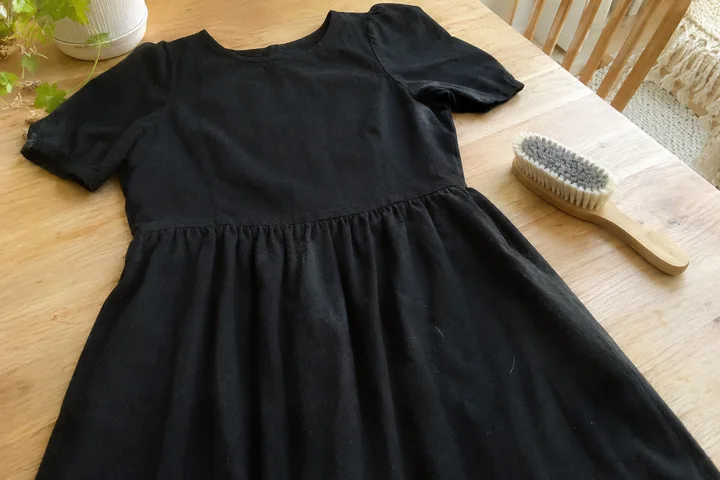
For loose lint on a black dress, start with a clean clothing brush or a label-compatible lint roller, tested on a hidden area. A fabric shaver addresses attached pills, not ordinary loose fluff. Check the fabric, trim and surface before choosing: a smooth cotton skirt and delicate sheer sleeves need different handling.
Is it lint, pilling or a change in the fabric?
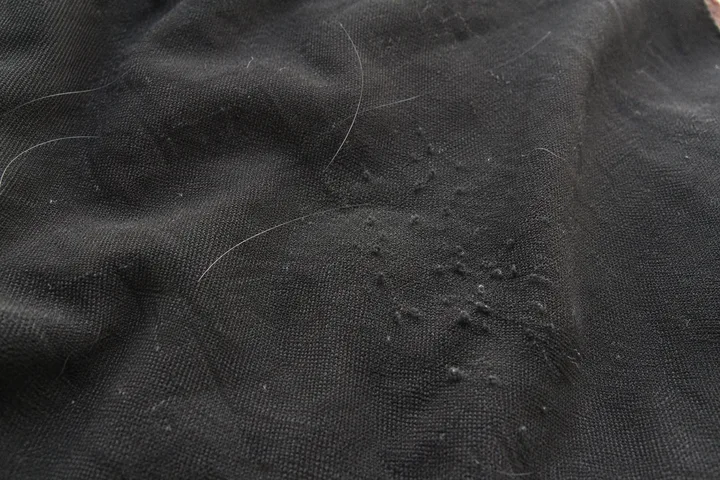
Lay the dry dress in good light and examine the affected patch without pulling at it. Loose pale fibers resting across the weave are different from small balls attached to the garment. A shiny area or pale abrasion may be a surface change rather than something you can remove. More brushing will not restore missing dye or a rubbed finish.
Steamery distinguishes loose lint from attached pills and recommends extra care with delicate fabrics. Its product guidance is useful for understanding the distinction, rather than proof that every tool suits every dress. Begin with your garment's label and the instructions for the particular tool.
| What you see | First decision |
|---|---|
| Loose hairs on a stable woven skirt | Test a clean brush on a concealed patch |
| Small attached fiber balls | Check shaver suitability; do not pull them off |
| Open mesh, embroidery or sequins | Avoid dragging a tool across raised details |
| Pale shine without loose fibers | Stop removing material and assess the finish |
How do you test a lint brush?
Support one layer of the dress on a clean flat surface. Choose a hidden area made from the same material as the visible patch; testing the lining tells you little about the outer shell. Follow the brush's directional instructions, using light pressure. Examine the test area from two angles before continuing. Stop if the surface lifts, catches or looks different.
The manufacturer's brush guidance specifically calls for a small concealed test and extra caution on sheer materials. Do not assume that a tool described for clothing can safely cross a lace insert, loose thread or embellished seam. Compare the construction with our black-dress fabric guide.
What about a sticky roller or fabric shaver?
If you use an adhesive roller, read its instructions and test first. Avoid repeatedly pressing tape into a delicate finish, and do not substitute strong household packing tape. Use a clean section as directed rather than pushing captured dirt back onto the garment. If the surface changes or adhesive remains, stop instead of trying a second adhesive over it.
A shaver cuts attached fibers. That makes it a different decision from lifting loose lint. Never improvise with a bare shaving razor on an unfamiliar dress. A fine knit, a raised seam and a loose embellishment can catch even when the broad skirt looks stable. If the permitted method is unclear, ask the maker or a cleaner before removing material.
Use a two-zone check before an occasion
- Inspect the visible skirt and bodice separately; they may use different cloth.
- Test only the method suited to each material and inspect the result.
- Work in short sections with the fabric supported, away from trim.
- Put on the complete outfit, then check where tights or a layer touch it.
For example, a woven skirt may release loose pale hair while sheer sleeves remain untouched. Treating the whole dress identically creates unnecessary risk. Our tights pairing guide helps you check the contact layer, and the little black dress guide covers the full outfit inspection.
How can you reduce the return of lint?
Store the clean dry dress away from visibly shedding items. Inspect the inside of a coat or cardigan before layering it over the dress. Follow the garment label for washing, separating it from unsuitable shedding textiles rather than adding extra products to solve every surface issue. Our black dress care guide separates cleaning decisions from color maintenance.
Before selling, photograph the dress after its final permitted care and disclose any remaining pilling or abrasion. Lint removal is preparation, not evidence of restored condition. Keep the tool away from a surface that continues to change, and choose another outfit if there is too little time for a safe test.