Care
How to approach deodorant marks on your black dress
Remove deodorant marks from a black dress with a care-label check, a discreet test and a clear distinction between fresh transfer and older buildup.
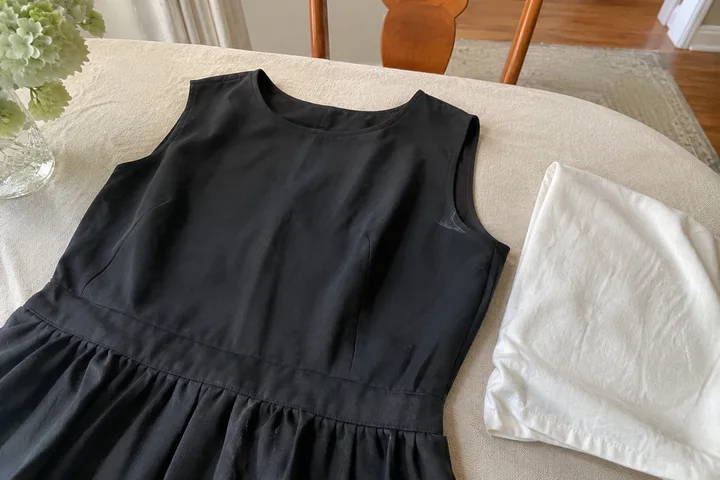
To remove deodorant marks from a black dress, first separate fresh surface transfer from an older underarm deposit. Read the garment label before using water or detergent. Test any permitted treatment discreetly, stop if color or texture changes, and use a professional cleaner for a delicate or dry-clean-only dress.
Is it fresh transfer or an older stain?
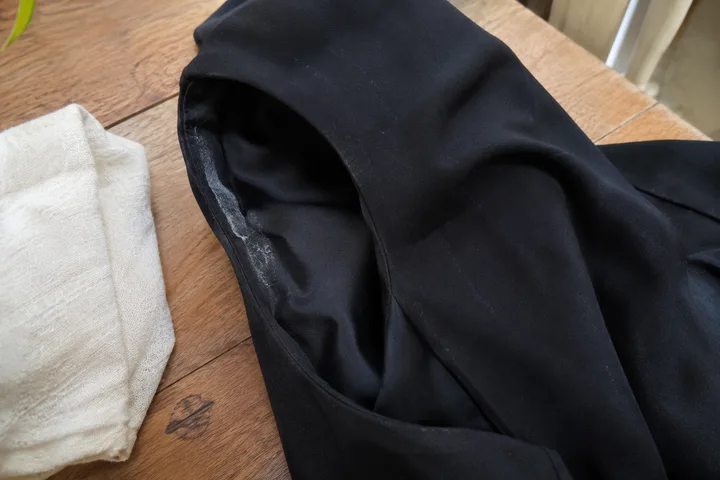
A pale streak that appeared while dressing is a different starting point from a stiff patch that has survived several washes. Rexona explains that antiperspirant ingredients can transfer as chalky marks. That explains one possible cause; it does not identify every white patch on black fabric. Check when the mark appeared and which product touched that location.
Lay the dress on a clean surface in ordinary daylight. Inspect the outside and inside without stretching the armhole. Note whether the area is powdery, greasy, stiff or simply lighter in one direction. If you cannot distinguish residue from an abraded surface, avoid repeated rubbing. Cleaning cannot replace lost dye or repair damaged fibers.
| What you see | First decision |
|---|---|
| Fresh pale transfer | Check label and discreetly test gentle removal |
| Old stiff underarm patch | Plan label-compatible cleaning with time to dry |
| Changed texture or missing color | Stop treating it as removable residue |
| Unknown care or delicate decoration | Ask the maker or a cleaner before wetting |
What does the dress allow?
Use the instructions for the complete garment, including lining, beads, interfacing and trims. The GINETEX care-symbol reference distinguishes washing, bleaching, drying, ironing and professional care. Permission to wash does not automatically permit bleach, hot water or vigorous brushing.
Read our black-dress care guide before setting up a wash. If a label is missing, a fiber guess is not enough to establish a method. Keep the dress, product name and treatment history together when seeking advice. A structured occasion dress can need a different approach from a washable jersey dress even if both look plain and black.
How should you approach a fresh mark?
NIVEA's clothing-care advice describes gentle cloth removal for fresh deodorant marks and emphasizes following garment instructions. Start on a hidden area with a clean, soft cloth rather than a brush. Check the cloth and fabric after a light pass. Stop if black transfers, the surface becomes shiny or a thread catches.
If water is permitted and appropriate, test it discreetly before touching the visible streak. Work gently, without soaking the lining or spreading the mark into a larger ring. Do not assume that a successful test on one seam guarantees every decorated panel will behave identically. Let the test area dry before deciding whether to continue.
Before you leave: choose the realistic option
I have time for cleaning and complete drying
Follow the label and compatible product instructions, then inspect the dry fabric before wearing.
The event starts soon
A replacement outfit may be more practical than leaving with a wet patch or an untested treatment.
The fabric or color changes during the test
Stop, record what you used and ask a cleaner before trying another method.
What if the patch is old or still visible?
Use only a detergent or stain treatment compatible with both its own instructions and the dress label. Do not combine cleaning products or keep escalating household recipes when the first attempt fails. Give a cleaner the product history, including any previous heat, water or stain treatment. A persistent patch needs assessment, not a guarantee of removal.
Once a permitted cleaning cycle is complete, inspect the dress before further drying or ironing. Compare in consistent light. If you are preparing a listing, photograph the remaining mark accurately; a darkened photograph does not establish that the stain has gone.
How can you reduce transfer next time?
Follow the deodorant's directions and allow it to dry before dressing. Avoid applying an unnecessary extra layer immediately before pulling a close-fitting dress over your head. Check the inside armholes after wearing rather than storing an unnoticed deposit. No product claim makes every fabric stain-proof.
Build this check into your little black dress routine: label, underarms, fastening and hem before the event; condition check afterwards. Keep a note of what worked on this particular garment. That record is more useful than treating all black dresses as interchangeable.