Style
How to style a black dress for day, night and work
Five ways to wear a black dress by occasion: office, weekend, dinner, party and wedding guest, with the layers and accessories that change the look.

One black dress can cover five occasions if you change three things: the layer over it, the shoes and the bag. Office calls for a structured jacket and a closed shoe. Weekends need denim or knit and flat footwear. Dinners and parties work with a sheen, a statement earring and a heel. The tabs below show each version step by step.
The dress is the base, the rest is the message
A black dress is neutral, so the other pieces decide the signal you send. Stylists often describe it as a blank page. A tailored blazer says work. A leather jacket says evening out. A chunky knit says weekend. The dress does not change; the layers do. That makes it the most efficient piece in a wardrobe, as long as you know which layer belongs to which occasion.
Before you start, check three things: the dress is clean and pressed, the fabric is opaque in the light of the room you will be in, and the hem matches your shoes. A black dress with a worn hem or a faded neckline looks tired in any outfit, however good the accessories are.
Five ways to wear it, by occasion
Use the tabs to switch between occasions. Each panel lists the layers, shoes and accessories that do the most work.
Pick an occasion
Use the arrow keys to move between tabs, or click one.
Layer: a tailored black or navy blazer, or a camel coat for winter. Shoes: pointed or closed-toe black pumps with a heel you can walk in all day. Bag: a structured tote. Jewellery: small studs and a watch.
Layer: a denim jacket or a cropped cardigan. Shoes: white leather sneakers or flat black ankle boots. Bag: a canvas or soft leather crossbody. Jewellery: one simple necklace.
Layer: a fitted leather jacket or a cropped velvet blazer. Shoes: strappy heeled sandals or a satin pump. Bag: a small clutch. Jewellery: a drop earring that catches the light.
Layer: a sequin or metallic top, or nothing at all on a warm night. Shoes: ankle-strap heels or a high-shine bootie. Bag: a mini chain bag. Jewellery: a bold cuff or a layered necklace.
First: check the invitation, ceremony and any requested palette. Layer: a jacket or wrap that works with those instructions. Shoes: an event-appropriate pair you can use on the actual ground. Accessories: choose the finish you like; pearls, metallics and color are options, not requirements.
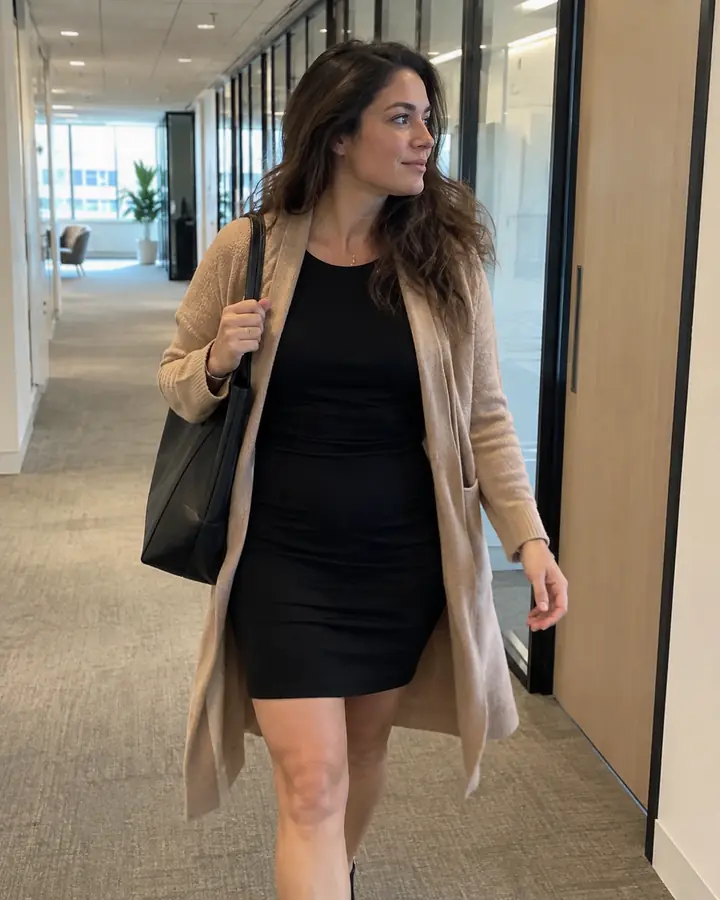
Office: structure does the work
At work, the goal is a silhouette that looks decided. A sheath in crepe with a blazer that ends at the hip is the classic combination. Keep the neckline modest if the dress is sleeveless, and choose a blazer with a clean shoulder. If the dress has a visible print of any kind, switch to a plain black one. The office rewards restraint.
Weekend: comfort and texture
On a weekend, jersey and knit dresses are the easiest to wear. A chunky knit cardigan or a denim jacket changes the mood without effort. Flat shoes are a good choice for walking, and a canvas bag suits the look better than leather. Add one textured piece, such as a woven belt or a straw hat in summer, so the outfit does not look like pyjamas.
Dinner and parties: sheen and shape
For evening, a little shine helps. Satin-back crepe catches the light, and a sequin top or a metallic clutch adds detail without a big print. Heels should be the right height for the venue: a stiletto is a risk on a cobbled street or a grass garden. Keep the makeup focused, and let either the lips or the eyes lead, not both, which we cover in our makeup guide.
Layers: how to change the temperature without changing the dress
A black dress works in every season if you think in layers. In spring, a light trench or a cropped jacket is enough. In summer, a linen shirt over a slip dress covers the shoulders for a day event. In winter, opaque tights, a long wool coat and a scarf turn a short dress into a practical outfit. The autumn layers guide has a planner for each temperature.
Accessories: fewer, better
Black is a strong base, so accessories should contrast with it. Choose one focal point at a time: shoes, a bag, or jewellery. Gold reads warm against black, silver reads cool, and a white or pale neutral sharpens the look. Keep watches and rings simple at work, and let one bolder piece take the lead in the evening.
Four common mistakes
- Too many black layers. Black on black on black can look flat. Add a second texture, such as knit under leather or satin under wool.
- Shoes that do not match the occasion. Sneakers at a formal dinner read as an accident; stilettos at a garden party sink into the grass.
- A hem that fights the shoe. A very short hem with ankle boots can look unbalanced. Check the length against the shoe before you leave.
- Ignoring the room. Fluorescent office lights show fabric and fit differently from a candlelit dinner. Test the look in both.
Frequently asked questions
Can a black dress be worn at a daytime wedding?
Yes, with a colour in the jacket or wrap and a lighter bag. Avoid a look that is all black if the invitation suggests a bright or outdoor event.
What is the easiest way to make a black dress look new?
Change the shoes or the outer layer. A new jacket or a different bag makes the dress look like a new outfit without any change to the dress itself.
Do I need a blazer with a black dress?
Not always. A blazer is useful for work and formal events. For a relaxed weekend, a knit, a denim jacket or nothing at all is usually better.
Which accessories work best with black?
Gold, silver, white and camel all work. Choose one that suits the occasion and keep the rest of the look simple.
Further reading
For a wedding, start with the hosts’ instructions
A wedding outfit needs the invitation and ceremony requirements before an accessory formula. Check the requested formality, any palette and the venue. A plain black dress can work at many contemporary US weddings, but it is not automatically appropriate for every family or event. If expectations are unclear, ask about the particular outfit rather than assuming a rule for an entire culture.
The wedding tab is a styling suggestion, not a requirement to wear pearls, pumps or a contrasting jacket. Choose shoes for the ground and walking distance, and a layer that meets any ceremony coverage requirements. A bright accessory is optional; it does not make an unsuitable dress code appropriate.
Use our black wedding-guest decision guide to check the event first. Then use the layers on this page to adapt a dress whose cut, fabric and fit already suit that event.
When the occasion is a memorial
For a memorial or funeral, begin with the family’s wishes and venue rather than applying a party or work formula. Some families request a color or casual clothing; a traditional service may call for a quieter outfit. Try the dress with a layer you already own and consider the surfaces you will walk on. The funeral attire guide offers a specific checklist without treating one custom as universal.
Match a black dress to an interview setting
Read the invitation for dress instructions before choosing a layer. A relaxed office and a formal interview can ask for different levels of structure; if the wording is unclear, a brief question to the recruiter is useful. Try the whole outfit while seated and consider any workplace tour. The job-interview dress guide separates business casual from more formal expectations without prescribing one outfit for every job.
Does an outfit picture show what is actually included?
A jacket, belt or bag can explain how you wear a dress while also covering details a buyer needs to see. For resale, include a view of the actual dress without those layers and state which items belong to the offer. A styled photograph should complement that evidence, not require the buyer to guess whether the accessories are included.
| Styled view | Companion information |
|---|---|
| Jacket over the bodice | Unlayered front and back views |
| Belt changes the waist outline | The dress’s natural shape and whether the belt is included |
| Pose hides a seam or hem | A clear additional view of that area |
Use the resale photo checklist for a black dress to check the evidence before choosing an outfit image. Avoid temporary pinning that makes the garment look narrower than the item a buyer will receive. Style ideas describe an option; they do not establish its current fit, condition or the contents of the sale.
Plan the order of dressing with the finished outfit
Try the dress, underlayers and jacket together before relying on the outfit for an event. A layer near a side opening creates a different handling task from one resting over a back closure. Keep loose edges clear and use the garment's intended dressing method. Do not stretch a neckline simply because the finished silhouette looks right.
| Stage | Useful observation |
|---|---|
| Before closing the dress | Are lining and underlayer edges clear? |
| After adding the jacket | Can you remove the layer without catching the closure? |
| When changing later | Is the help or access you need available? |
Use the dress zipper placement guide if the opening is the uncertain part of the outfit. An accessory can shift visual emphasis, but it cannot make a strained fastening work correctly. Keep an alternative outfit ready when access or condition remains unresolved rather than leaving the changing routine to the last minute.
How do you check an existing keeper with a layered outfit?
Put the dress together with the undergarments and outer layer you intend to wear before relying on a shoulder keeper. First identify what the feature is designed to hold. Do not add a second strap merely because it can be squeezed into the closure; that changes the combination being checked.
| Stage | Observation |
|---|---|
| Dress and intended undergarment | Confirmed keeper closes without pulling either strap into discomfort |
| Add the jacket or cardigan | Its shoulder and sleeve movement do not catch the inside arrangement |
| Ordinary comfortable movement | Neckline, straps and layers remain where you intend them |
The hanger-loop and bra-keeper guide distinguishes an inside storage ribbon from a wearing feature. Keep the former inside without turning it into a replacement dress strap. If the confirmed closure strains, catches or feels uncomfortable, leave the fastening alone and choose another outfit combination or arrange an assessment. A styling photograph cannot demonstrate the hidden attachment or prove comfort.