Style
Why does black velvet look lighter from some angles?
Compare black velvet under one light before calling a lighter area fading. Understand nap, record two viewpoints and keep care and condition questions separate.
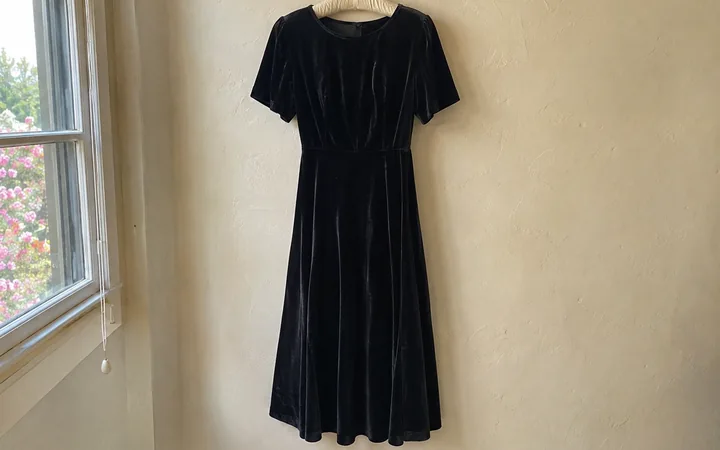
Velvet can look lighter or darker as its pile and your viewing angle change how it catches light. Compare the same area under one light before calling the difference fading. Keep a fixed mark or damaged surface as a separate condition question. The care label guides any treatment.
What does nap mean on a velvet dress?
Nap is the directional character of a raised fabric surface. On velvet, the pile can present a different appearance as its direction and your viewpoint change. Black can consequently show charcoal highlights beside deeper areas without that contrast, by itself, proving a different dye color.
The Texas A&M archive's Velvet and Velveteen All Sewn Up illustrates different appearances associated with pile direction. Its diagram helps explain the effect; its older general care advice should not replace the instructions for your dress.
How can you compare the same area fairly?
Keep one light source and one area of the dress as your reference, then change your viewpoint. Note whether the lighter appearance moves with the view or remains at a particular location. This separates an observation from a guess about its cause.
| Observation | Useful next record |
|---|---|
| A highlight changes with the view | The same area's appearance from each position |
| A local mark remains visible | Its location and surface condition in a wider view |
| Two photos use different light | A fresh comparison with one consistent setup |
Which change are you seeing?
Open the case that matches your observation before choosing a treatment.
The lighter area shifts when I change position
Record the two views under the same light. Directional appearance may contribute; keep a separate note of any visible wear or damage.
A particular mark remains visible
Locate it on the dress and photograph its surrounding area. Ask the maker or cleaner about that condition rather than assuming a general nap effect explains it.
I only have photos taken in different setups
Ask for comparable views of the actual garment in consistent light. Keep the color and condition question open until that evidence is available.
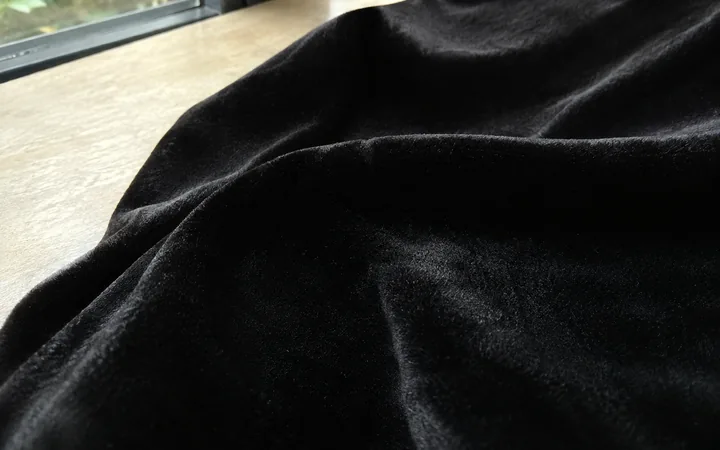
What changes with crushed or patterned velvet?
An uneven-looking surface can be part of the intended finish. Sew Me Sunshine's fabric guide describes intentionally crushed surfaces and other velvet variations. Check the product description and care label alongside the actual texture.
A photograph of a marbled finish does not establish staining. Equally, the word crushed cannot explain every mark on a used dress. Ask about the specific area if its appearance differs from the description.
Does a different-looking panel prove a cutting mistake?
Pile direction is one relevant question when adjacent panels appear different. Endless Fabrics explains why it considers nap direction when cutting. That principle does not identify the construction history of a finished dress from one image.
Compare the seam area under consistent conditions and ask the maker about the intended finish if the contrast concerns you. Keep composition and garment behavior separate too: our black-fabric comparison explains why a surface name alone cannot supply the fiber content or care method.
What should you record before asking for help?
Write down the light, viewpoints and location of the area you are comparing. Add what you know from the label and the garment's history. Describe a change after cleaning as timing information, while leaving its cause for assessment.
Make a comparison note
Write your observations, then copy them into your own record before leaving the page. These fields have no submit action.
Should you brush, steam or wash it to even out the shade?
Use the dress's care instructions to decide on treatment. A visual comparison is useful before changing the surface; rubbing or pressing an unknown finish is a different intervention. Our black-dress care guide starts with the label and the actual fabric.
For a resale listing, retain the original views and describe the area clearly. The black-dress photography guide helps you show detail without editing away condition. A helpful explanation of nap should make a listing clearer, while preserving the evidence of the actual dress.
Questions about velvet looking light and dark
Why does velvet look like different shades?
Its directional pile and the light/viewing conditions can change its apparent tone. Compare the same area in consistent light before interpreting the difference.
Does a light patch prove the velvet has faded?
A single view does not establish fading. Record whether the appearance shifts with your viewpoint and whether a particular mark remains visible.
Is crushed velvet meant to look uneven?
Intentional crushed finishes can create varied reflections. Check the actual finish and description; that name does not explain every possible condition mark.
Can you tell the fiber from the shine?
Appearance alone does not identify silk, cotton, polyester or a blend. Read the composition label and ask about missing information.
Must all panels look identical in every photograph?
Pile direction, folds and lighting affect the view. Ask about an unexpected seam-to-seam contrast without deciding the construction history from one picture.
Can I use one cleaning trick on every velvet dress?
Care depends on the actual material and finish. Follow the garment instructions and ask a suitable cleaner about an unresolved mark.