Style
Black dress see-through sleeves: design, light and coverage
Check whether sheer sleeves are intentional on your black dress. Compare light, layers and movement before choosing a jacket, underlayer or permanent lining.
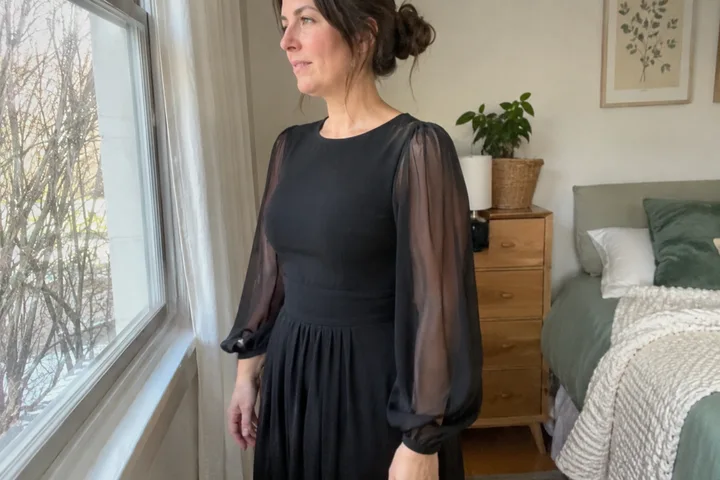
See-through sleeves on a black dress can be an intentional design, even when the bodice is lined. Check the maker's description, compare the layers and try the garment in the light where you expect to wear it. If you want more coverage, compare an outer layer before asking about permanent sleeve lining.
Check what is supposed to be sheer
Look at the sleeves, bodice, back and skirt separately. A product described simply as lined may have lining in only part of the garment. Read any detailed construction notes and inspect the actual dress rather than assuming that the word applies to every panel.
Remnant House's sheer-fabric guide describes unlined chiffon as an option for deliberately transparent sleeves. That is a construction possibility, not evidence that every transparent area on your own dress is intentional. Ask the maker if the description and the garment do not agree.
Compare ordinary light and movement
Try the complete outfit in daylight and in a setting similar to the event. Keep your arms relaxed, then bend an elbow and reach normally. Notice both coverage and whether seams, cuffs or an underlayer become uncomfortable. A bright window behind the fabric gives different information from a front-lit mirror.
If you take photographs for comparison, keep the light and pose consistent. A single flash picture cannot establish how the garment will look throughout the day. Decide which level of coverage you actually want rather than treating all visible skin through a sleeve as a fault.
| Observation | Useful next check |
|---|---|
| Even sheerness in both sleeves | Compare the described design and intended coverage |
| A local pulled or open area | Record the location for a condition assessment |
| Coverage changes when reaching | Try the full outfit in that movement |
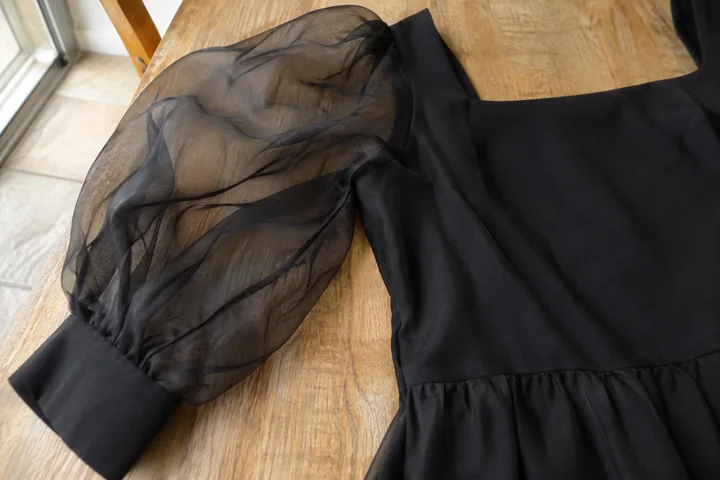
Similar transparency can have a different drape
Mood Fabrics describes organza as a crisp sheer fabric. A sleeve with that structure will not necessarily settle like a soft chiffon sleeve. Transparency alone does not tell you the fiber, stiffness or care method. Keep the label and the actual construction in the comparison.
Do not stretch a sleeve to see whether it becomes more opaque or rub the surface to test its strength. If one area looks newly damaged, separate that observation from an evenly sheer design. The light-and-surface guide also explains why a changed highlight and a physical opening are different questions.
What do you want to change?
I like the sleeve but want coverage for one event
Compare a suitable jacket or wrap with the dress on, including the seated and reaching checks.
I want the sleeve permanently lined
Ask a dressmaker how an added layer would affect movement, seams, cuffs and appearance.
One area looks different from the rest
Record its location and history before assuming that the entire sleeve needs lining.
Try a reversible coverage option first
A jacket or wrap can change coverage without changing the sleeve itself. Check whether the additional layer compresses a full sleeve, catches a cuff or restricts the armhole. Mood's sleeve-shape reference is useful vocabulary when describing a fuller or fluttering sleeve to a dressmaker.
A sleeved underlayer is another combination to assess, but its seams and neckline may remain visible through the dress. It is not automatically a substitute for integrated lining. Keep hair clips and accessories clear of delicate cloth; the extensions guide includes the separate question of contact with the outfit.
Ask about the finished sleeve, not just extra fabric
Bring the dress and explain where you want coverage. Ask how a proposed layer attaches, whether it changes the cuff or armhole, and how much movement remains. Review the appearance with your arm bent as well as lowered. A lining alters the combination of layers and may change the original floating effect.
Do not choose a heat or spray treatment to make a transparent sleeve opaque. The care checklist keeps allowed treatment separate from a design change. If the existing garment cannot provide the coverage you need comfortably, compare another outfit before committing to reconstruction.
Sheer-sleeve questions
Does a lined dress always have lined sleeves?
No. Check which panels are lined in the actual construction.
Does black guarantee opacity?
No. Inspect the fabric, layers and relevant lighting.
Will lining leave the sleeve shape unchanged?
Ask about the actual sleeve; another layer can change its movement and appearance.