Care
Wrinkled black dress: what to check before treatment
Identify creases, intended texture and changed marks on a black dress. Read the complete garment care instructions before choosing heat, steam or pressing.
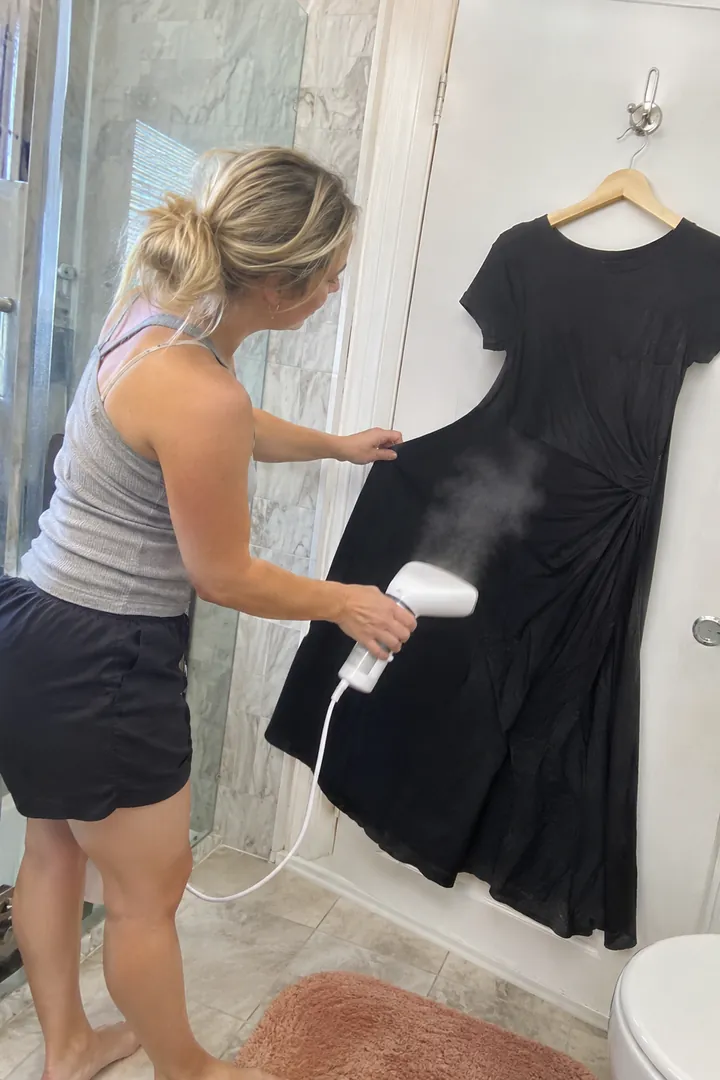
Before treating wrinkles in a black dress, read the garment's care label and identify the area that has changed. A storage fold, a designed pleat and a shiny pressure mark need different questions. Use only a method allowed for the complete garment, including its lining and trim; black color does not supply an ironing setting.
Is it a crease or part of the surface?
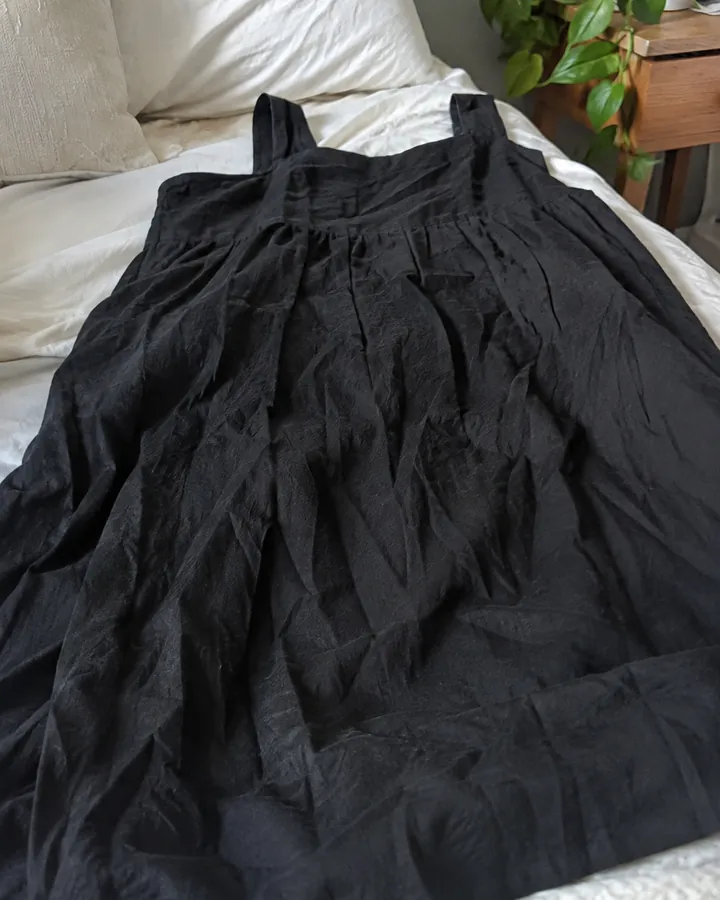
Let the dress rest in its intended shape and compare the area in ordinary light from more than one angle. Look for a fold in the cloth rather than deciding from a bright line in one photograph. Velvet pile, satin reflections and deliberately crinkled surfaces can change appearance as you turn the garment.
Check product photographs or an earlier view of your own dress if available. A permanent pleat or a textured finish is not necessarily something to smooth away. If the appearance changed after a particular treatment, record what happened without assuming that heat, moisture or storage alone explains the result.
Read the instructions for the whole dress
The GINETEX care-symbol guide explains the separate ironing instructions, including restrictions on steam. A permission to wash is not an instruction to iron, and an iron symbol should not be interpreted from the number of dots without reading the relevant guidance.
Check written instructions alongside symbols. A dress may combine an outer fabric, lining, interfacing, embroidery and attached decorations. A generic chart for the main fiber cannot establish what the finished garment tolerates. If the label is missing or contradictory, ask the maker or a cleaner who can inspect the dress before choosing a treatment.
| What you see | What to check first |
|---|---|
| A fold after packing | The permitted method for the complete dress |
| A regular repeated texture | Whether the finish is intentional |
| A changed shiny patch | Treatment history and a specialist assessment |
Steam and pressing are different choices
A steamer supplies heat and moisture; an iron can also apply direct pressure. Owning one does not make its method suitable for every dress. Steamery's fabric guidance lists exclusions even within its broad steaming advice. Keep equipment instructions and garment restrictions together rather than adopting a claim that steam is always harmless.
Woolmark's wool-ironing guide begins with the garment's care claim. It is a material-specific example, not a method for all black dresses. Do not transfer settings from a wool tutorial to a satin or embellished gown because the crease looks similar.
Which information is missing?
The label forbids the treatment I planned
Do not replace that restriction with a generic online method. Ask about another permitted option for this dress.
The surface may be intentionally textured
Compare the maker's description before trying to flatten it.
I cannot identify the finish or lining
Bring the complete garment and any care history to a suitable specialist.
Prepare the garment, not the complete styled outfit
Remove separately worn accessories before a permitted care treatment. A waist belt may be causing folds by gathering fabric; compare the dress without it before calling the marks a permanent fault. An accessory's material does not automatically tolerate the dress's own care method.
Keep a necklace clear of the work area, and identify inside loops and keepers before using them for support. Do not suspend the whole dress from a small decorative or fastening component merely because you need your hands free.
Stop when the appearance changes unexpectedly
If a permitted treatment produces an unfamiliar mark, stop instead of increasing heat or adding another product. Record the device, setting and area treated for the person assessing it. A wrinkle spray, vinegar mixture or bathroom-steam shortcut is still a treatment; none follows automatically from the color black.
Allow enough time before an event to resolve unclear instructions. A second outfit may be a more practical choice than rushing an unfamiliar process. For future storage, ask how this dress should be supported and packed, keeping its construction and finish in the plan.
Wrinkle questions
Does black fabric need a hotter iron?
No setting follows from color alone. Read the actual garment directions.
Can every dress be steamed instead?
No. Check both the garment's restrictions and the equipment instructions.
Should all regular folds be removed?
Identify intended pleats or texture before changing them.