Style
Choosing fixed or removable white collar and cuffs
Choose a black dress with white collar and cuffs by construction. Compare removable trim, check neck and wrist fit, and read the care labels.
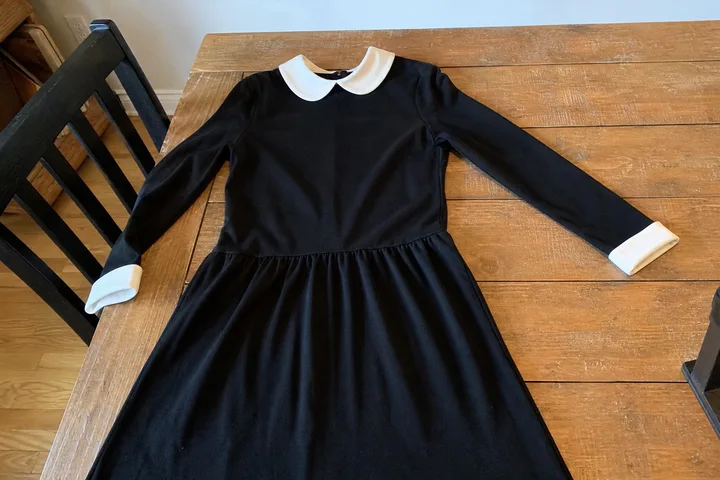
A black dress with white collar and cuffs can have sewn-in trim, detachable pieces or a separate shirt underneath. Check which construction you are buying before choosing a size or cleaning method. The white details should sit comfortably when you turn your head, bend your elbows and reach forward, without pulling the black fabric.
Which construction suits your wardrobe?
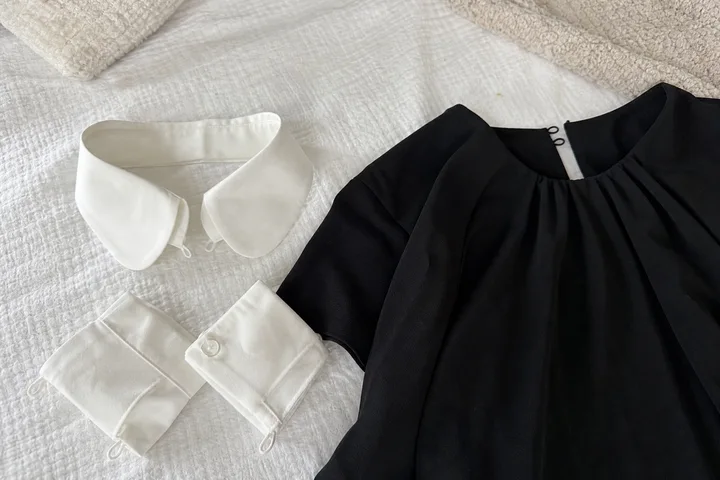
Start with the inside neckline and sleeve ends, not the product name. “Contrast collar” describes the color arrangement; it does not promise that any part comes off. A detachable bow also does not mean the collar is detachable. Ask for an inside photograph if the listing is unclear. A seam joining white fabric directly to black usually means the two must be cared for together.
| Construction | Check before choosing |
|---|---|
| Fixed collar and cuffs | Whole-garment care instructions and neckline comfort |
| Removable collar and cuffs | Complete fastenings, matching pieces and separate care labels |
| Shirt under a plain dress | Room at armholes and sleeve ends without bunching |
Choose fixed trim if you want the neckline to remain in one designed position. Choose removable pieces if you value changing the look, provided the attachments are sound. Layer a shirt only when the dress has enough room for it. Buying a larger dress solely to accommodate a bulky shirt can move the shoulder and waist seams away from where you want them.
How can you check the collar without guessing?
Fasten the dress as intended and look straight ahead, then turn your head each way. Sit down and reach forward as if using a desk. The collar should not press into your throat, gape dramatically at the back or pull the shoulder fabric upward. Try the garment with the underlayers you expect to wear; a different neckline underneath can change the result.
For a remote purchase, compare the seller's flat garment measurements with a comfortable dress of similar construction. Request the closed neckline opening and cuff opening, plus an explanation of how they fasten. A stretchy black body does not establish that a woven white cuff stretches. Our little black dress selection guide covers the rest of the fit check.
What should you inspect on the cuffs?
Bend both elbows, reach toward a shelf and put on your intended jacket. Check whether the cuff catches inside the jacket sleeve or restricts the wrist. An opening that admits your hand when unfastened may still feel tight when closed. If the dress has removable cuffs, lay both pieces together and check that their buttons, loops or snaps are present and compatible.
A useful buying checklist is to photograph the front neckline, back fastening, both sleeve ends and the care label. For a used dress, request close views of the inside neck and cuff edges as well. Yellowing, makeup marks and loose attachments are easier to assess there than in a full-length photograph. Use our dress resale photography checklist when documenting your own garment.
Can the white parts be cleaned separately?
Only assume separate cleaning is possible when the pieces are designed to detach and their instructions allow it. Do not unpick a sewn collar to make it washable. Read every applicable label before treating either color. The GINETEX care-symbol guide explains washing, bleaching, drying and professional-care symbols; white fabric alone is not permission to use bleach.
Follow the restriction that applies to the complete fixed-trim garment. If the label is missing, especially on a vintage piece, ask a professional cleaner to assess the combination rather than experimenting with stain remover at the join. Our black dress care guide helps separate fading concerns from routine surface maintenance.
How do you style it without adding clutter?
Treat the white collar as an existing neckline detail. Try the dress with no necklace first; a pendant can overlap the collar edge or tangle with a bow. Plain shoes and a simple bag let you judge the silhouette before adding more contrast. Matching every accessory to the white trim is an option, not a rule.
For a wedding or memorial, read the invitation or family's guidance before relying on a color formula. The amount of contrast, cut and local expectations matter together. Before leaving, check that removable parts are fully attached and that the outfit remains comfortable seated. A small, complete checklist is more useful than choosing by a character association or a product photograph alone.