Care
Diagnose lint and pale marks after washing black clothes
Black clothes lint after washing? Separate loose fibers, tissue and pale residue, then use a care-label check and one-change laundry log.
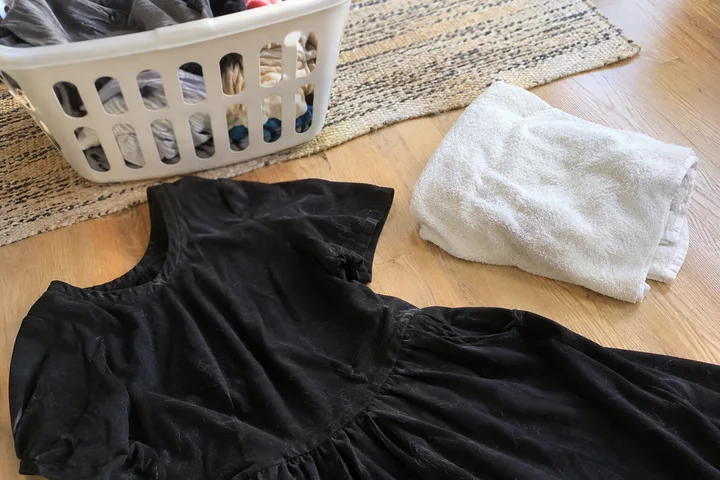
Black clothes with lint after washing need a diagnosis before another wash. Loose threads, tissue fragments, pale detergent residue and attached pills can look similar against dark fabric. Check a dry, hidden area in daylight, read the care label, and change one laundry variable at a time rather than scrubbing the whole garment.
Is it lint, residue or damage?
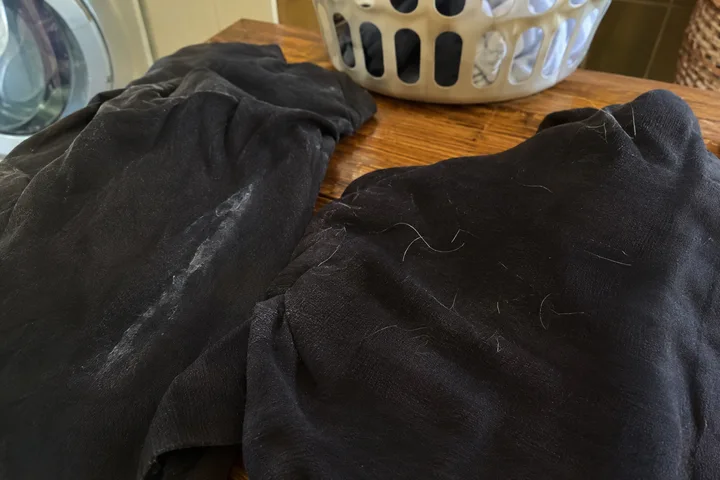
Place the dry garment on a clean surface. Examine the marks without pulling at the cloth. Loose fibers usually have visible strands; tissue can form irregular flakes. Residue may look more like a smear or powder. These are clues, not a laboratory identification. A pale area that stays within the fabric rather than sitting on it may be a color change, which a lint roller cannot reverse.
| Appearance | Next check |
|---|---|
| Long loose fibers | Inspect the other items from the load |
| Paper-like flakes | Check emptied pockets and seams |
| Pale streaks without strands | Review detergent dose and rinse instructions |
| Balls anchored to the fabric | Treat as possible pilling rather than loose lint |
Where did the loose material come from?
Check pockets before blaming the machine. Maytag's lint troubleshooting guidance identifies forgotten tissues and paper as possible sources. Inspect the load for an obvious shedder, such as a new towel, and separate it from dark garments on the next suitable wash. Sorting by color alone does not account for surface texture.
For a dress, turn out the pockets and look along the lining edge without stretching it. Remove loose debris from the empty machine only as its manual directs. A filter described for one washer is not necessarily accessible or user-serviceable on another model. Do not dismantle parts based on a generic laundry tip.
What if the white marks do not brush away?
Do not keep rubbing simply because the fabric is black. Review the detergent instructions, the dose used and the machine's loading guidance. More product is not automatically a better wash. If a rinse is appropriate, follow both the garment label and the washer manual; do not select a hotter cycle as a universal fix.
The GINETEX care-label guide explains the treatment symbols. A mixed-material dress may include lining, trim and sheer panels with different sensitivities, so the finished garment's label matters more than a rule of thumb about its main fiber. Our black-dress care guide covers routine color-preserving choices.
Use a one-change laundry log
Write down the garment, its permitted treatment, the load companions, detergent dose and where the marks appeared. Record what you actually observed rather than naming an unproven cause. On the next permitted wash, alter one relevant factor: for instance, remove a shedding towel while keeping the label-approved program and correct detergent dose. Photograph the same area in comparable light after drying.
- Record the problem before treatment, including whether it is loose or attached.
- Choose one change that the label and manual allow.
- Compare the same section after the garment is completely dry.
- If the change does not help, record that result before choosing another.
This log is a troubleshooting method, not a claim that any particular combination has been tested here. If several unrelated loads develop the same marks, consult the washer manufacturer's model-specific support. If only one garment changes, ask its maker or a professional cleaner about that construction.
When is a lint tool the right next step?
Once the garment is dry and the material is clearly loose surface lint, choose a gentle, fabric-appropriate method. The brush, roller and shaver comparison separates loose fluff from attached pills. A shaver is not a detergent-residue treatment. Stop if the surface catches, pulls or becomes shiny, especially on mesh, lace or embroidery.
Before putting the dress back into rotation, check its overall fit and condition using the little black dress selection guide. A clean garment can still need a seam repair. Keep the cause of the laundry marks separate from decisions about fit, accessories or replacing the dress.