Style
How to style a black dress for day, night and work
Five ways to wear a black dress by occasion: office, weekend, dinner, party and wedding guest, with the layers and accessories that change the look.

One black dress can cover five occasions if you change three things: the layer over it, the shoes and the bag. Office calls for a structured jacket and a closed shoe. Weekends need denim or knit and flat footwear. Dinners and parties work with a sheen, a statement earring and a heel. The tabs below show each version step by step.
The dress is the base, the rest is the message
A black dress is neutral, so the other pieces decide the signal you send. Stylists often describe it as a blank page. A tailored blazer says work. A leather jacket says evening out. A chunky knit says weekend. The dress does not change; the layers do. That makes it the most efficient piece in a wardrobe, as long as you know which layer belongs to which occasion.
Before you start, check three things: the dress is clean and pressed, the fabric is opaque in the light of the room you will be in, and the hem matches your shoes. A black dress with a worn hem or a faded neckline looks tired in any outfit, however good the accessories are.
Five ways to wear it, by occasion
Use the tabs to switch between occasions. Each panel lists the layers, shoes and accessories that do the most work.
Pick an occasion
Use the arrow keys to move between tabs, or click one.
Layer: a tailored black or navy blazer, or a camel coat for winter. Shoes: pointed or closed-toe black pumps with a heel you can walk in all day. Bag: a structured tote. Jewellery: small studs and a watch.
Layer: a denim jacket or a cropped cardigan. Shoes: white leather sneakers or flat black ankle boots. Bag: a canvas or soft leather crossbody. Jewellery: one simple necklace.
Layer: a fitted leather jacket or a cropped velvet blazer. Shoes: strappy heeled sandals or a satin pump. Bag: a small clutch. Jewellery: a drop earring that catches the light.
Layer: a sequin or metallic top, or nothing at all on a warm night. Shoes: ankle-strap heels or a high-shine bootie. Bag: a mini chain bag. Jewellery: a bold cuff or a layered necklace.
Layer: a tailored jacket in a colour other than white, or a wrap in silk. Shoes: closed-toe pumps in matte black or dark metallic. Bag: a small structured clutch. Jewellery: pearls or gold, never anything that could be mistaken for the bride's style.
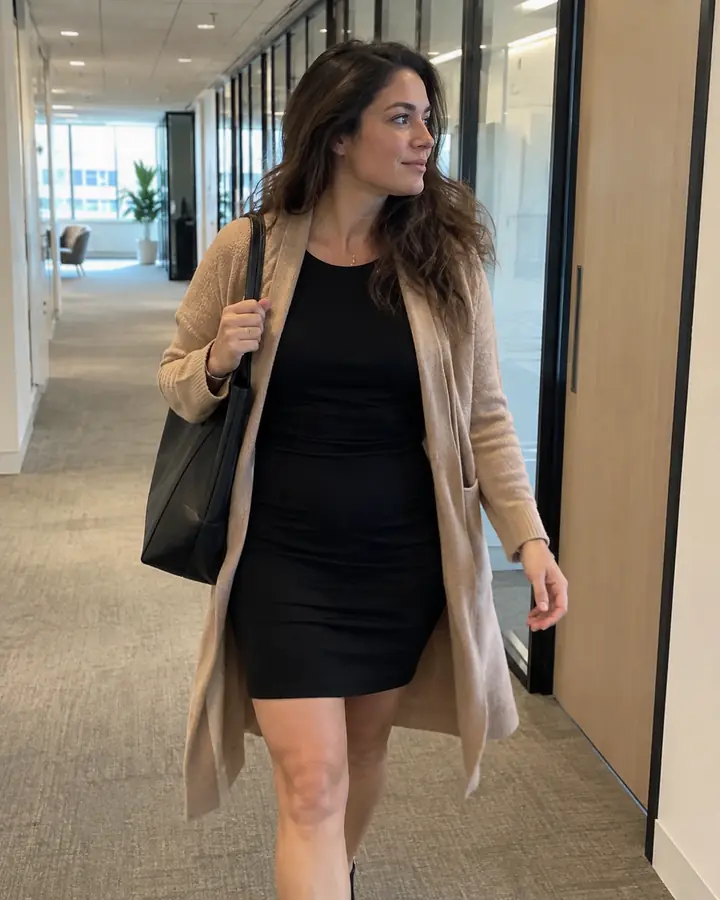
Office: structure does the work
At work, the goal is a silhouette that looks decided. A sheath in crepe with a blazer that ends at the hip is the classic combination. Keep the neckline modest if the dress is sleeveless, and choose a blazer with a clean shoulder. If the dress has a visible print of any kind, switch to a plain black one. The office rewards restraint.
Weekend: comfort and texture
On a weekend, jersey and knit dresses are the easiest to wear. A chunky knit cardigan or a denim jacket changes the mood without effort. Flat shoes are a good choice for walking, and a canvas bag suits the look better than leather. Add one textured piece, such as a woven belt or a straw hat in summer, so the outfit does not look like pyjamas.
Dinner and parties: sheen and shape
For evening, a little shine helps. Satin-back crepe catches the light, and a sequin top or a metallic clutch adds detail without a big print. Heels should be the right height for the venue: a stiletto is a risk on a cobbled street or a grass garden. Keep the makeup focused, and let either the lips or the eyes lead, not both, which we cover in our makeup guide.
Layers: how to change the temperature without changing the dress
A black dress works in every season if you think in layers. In spring, a light trench or a cropped jacket is enough. In summer, a linen shirt over a slip dress covers the shoulders for a day event. In winter, opaque tights, a long wool coat and a scarf turn a short dress into a practical outfit. The autumn layers guide has a planner for each temperature.
Accessories: fewer, better
Black is a strong base, so accessories should contrast with it. Choose one focal point at a time: shoes, a bag, or jewellery. Gold reads warm against black, silver reads cool, and a white or pale neutral sharpens the look. Keep watches and rings simple at work, and let one bolder piece take the lead in the evening.
Four common mistakes
- Too many black layers. Black on black on black can look flat. Add a second texture, such as knit under leather or satin under wool.
- Shoes that do not match the occasion. Sneakers at a formal dinner read as an accident; stilettos at a garden party sink into the grass.
- A hem that fights the shoe. A very short hem with ankle boots can look unbalanced. Check the length against the shoe before you leave.
- Ignoring the room. Fluorescent office lights show fabric and fit differently from a candlelit dinner. Test the look in both.
Frequently asked questions
Can a black dress be worn at a daytime wedding?
Yes, with a colour in the jacket or wrap and a lighter bag. Avoid a look that is all black if the invitation suggests a bright or outdoor event.
What is the easiest way to make a black dress look new?
Change the shoes or the outer layer. A new jacket or a different bag makes the dress look like a new outfit without any change to the dress itself.
Do I need a blazer with a black dress?
Not always. A blazer is useful for work and formal events. For a relaxed weekend, a knit, a denim jacket or nothing at all is usually better.
Which accessories work best with black?
Gold, silver, white and camel all work. Choose one that suits the occasion and keep the rest of the look simple.